
Last updated November 18, 2026
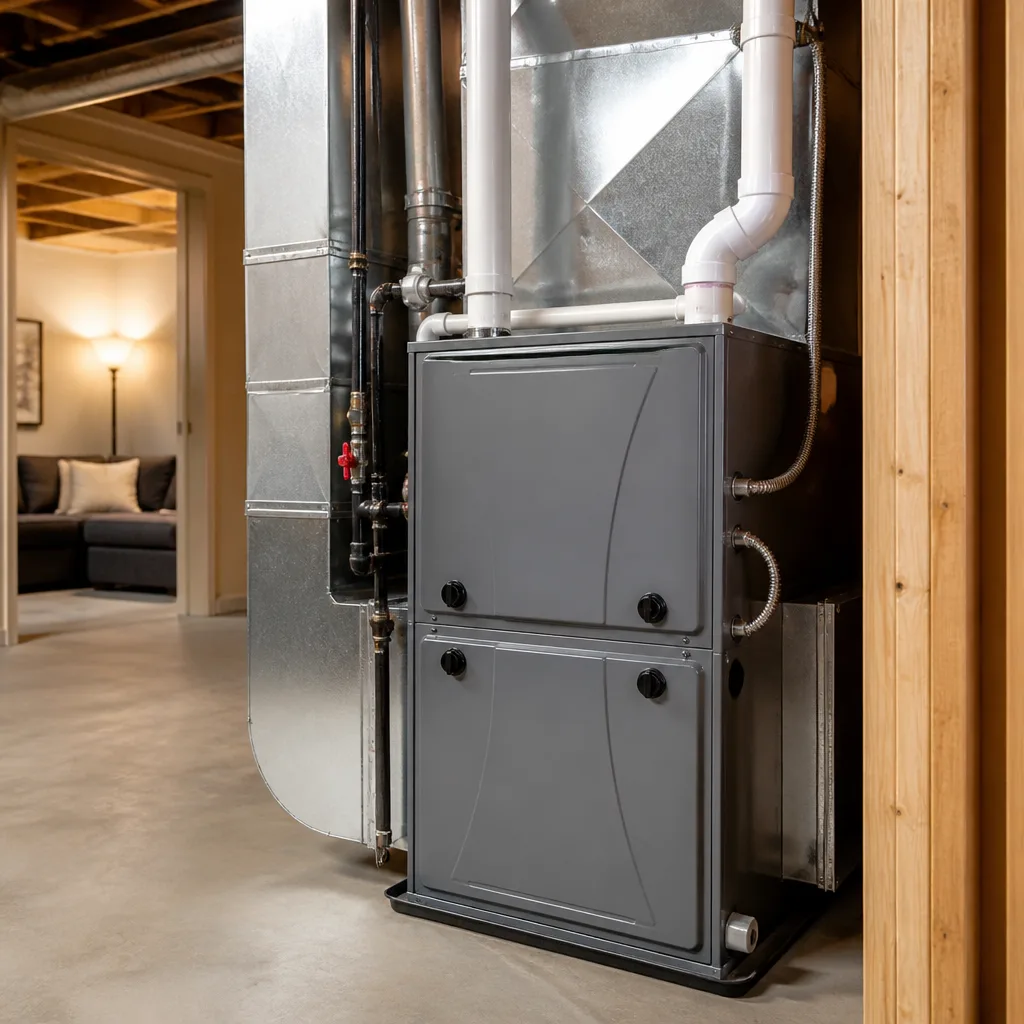 Furnace & heating
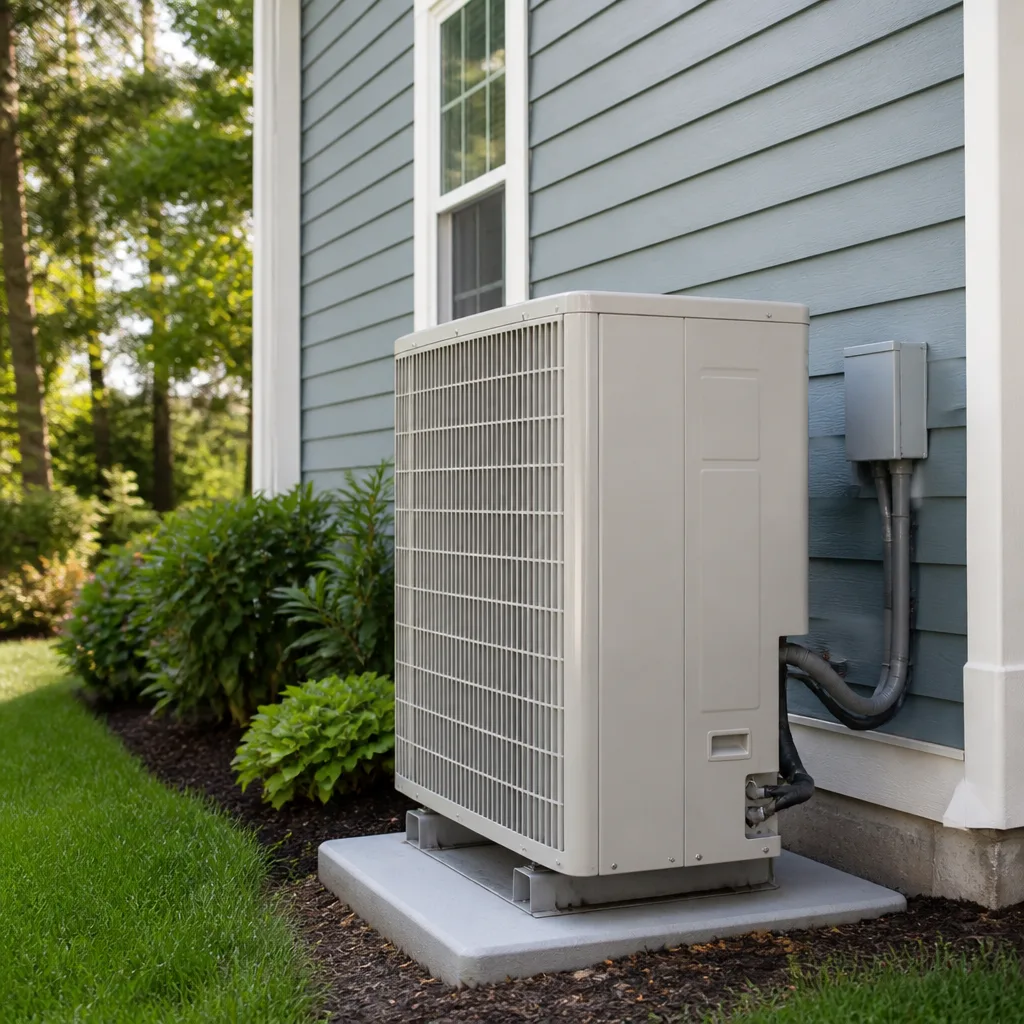 Heat pumps
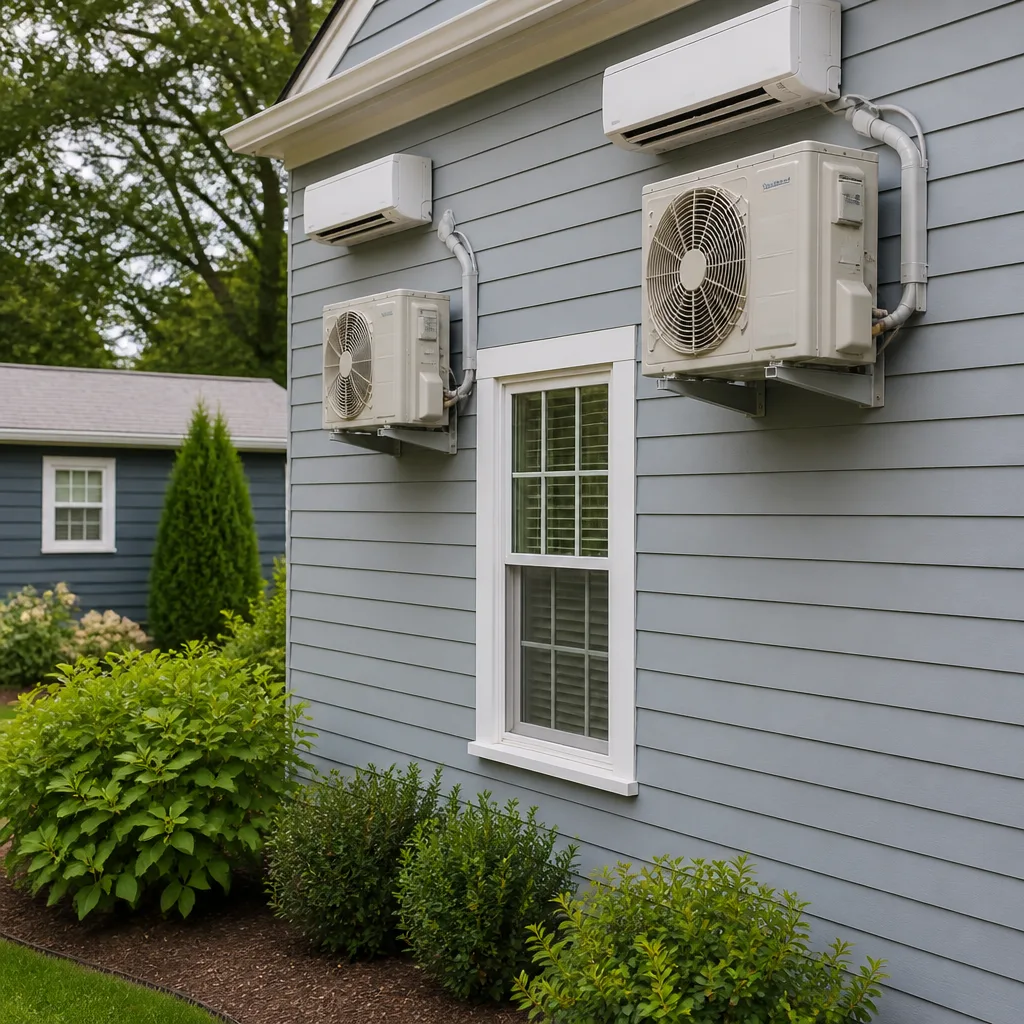 Ductless mini splits
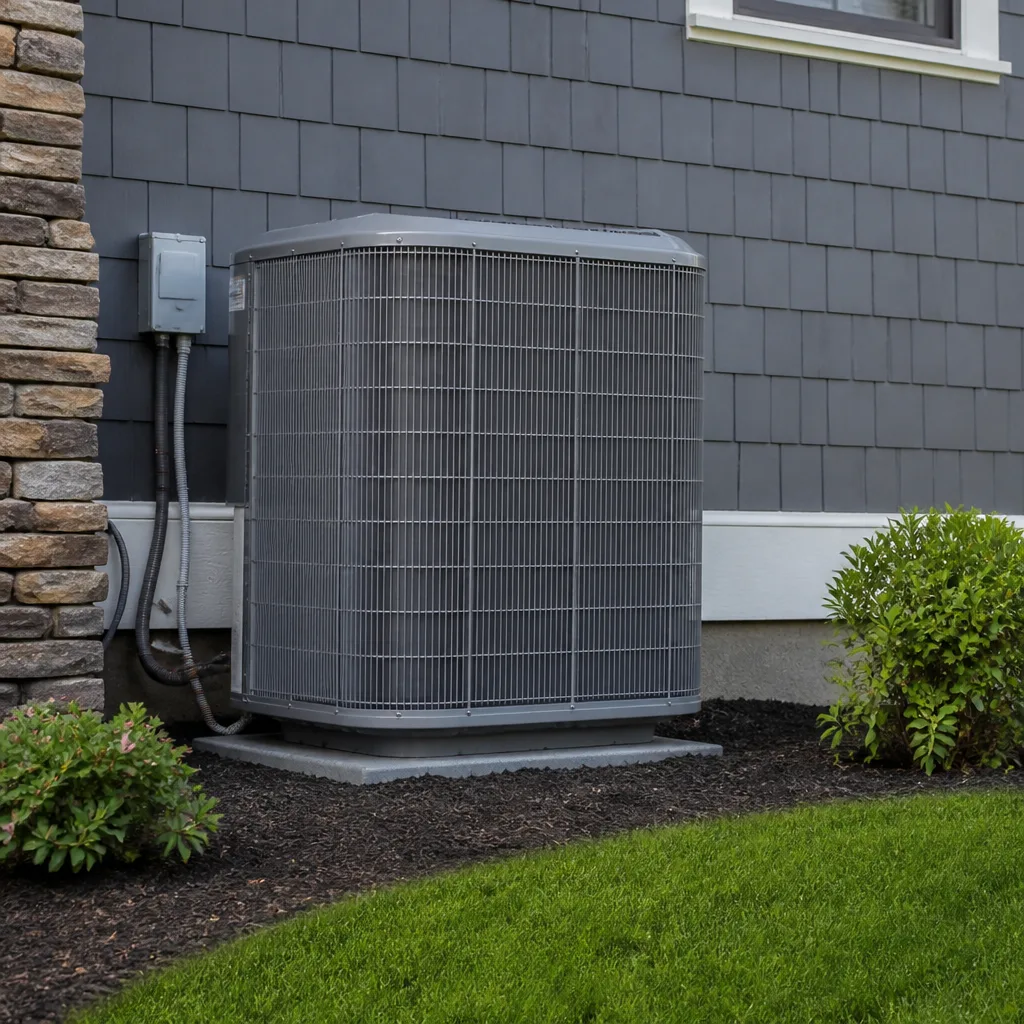 Carrier
 Trane
 Goodman
Seasonal tune-up and full diagnostic on your Carrier, Trane, or Goodman system - readings shown to you before any repair is proposed
Diagnosis first, numbers second - you approve the repair price before a single part goes in.
Get your free estimateSeasonal HVAC Care for Summerlin: Year-Round Homeowner’s Guide
Most homeowners here treat HVAC care like a four-season calendar: spring tune-up, summer cooling, fall shutdown, winter rest. That calendar was written for climates with four roughly equal seasons, and Summerlin doesn’t have them. What we have is a long, punishing cooling season that runs the compressor hard for months, a short but real heating season that leans on heat pumps more than most desert households expect, and two transition windows – roughly October and April – that quietly decide whether next summer goes smoothly or turns into an emergency call. October is the most underused month in Summerlin HVAC ownership. Your system just came off a 100-day sprint and is holding onto heat-related wear that gets dramatically worse if nobody catches it before the next cooling season. This guide lays out what to actually do, month by month, in Summerlin.
Quick Answer
The right seasonal care schedule for a Summerlin home is built around cooling, not four equal seasons: a full inspection in October after the heavy cooling load ends, heat-pump and reversing-valve checks in November and December before the short heating season, pre-season service in April before the May rush, and post-dust checks through the July-to-September monsoon window. Skipping the October and April windows is the single most common reason a Summerlin system fails in July.
Styles & brands we work with
- AC installation
- Furnace & heating
- Heat pumps
- Ductless mini splits
- Carrier
- Trane
- Goodman
Table of Contents
- Why Summerlin’s Climate Breaks the Standard Four-Season Schedule
- The Summerlin Month-by-Month HVAC Calendar
- October: The Inspection That Protects Next Summer
- Winter Heating Prep for Heat-Pump Homes
- April Pre-Season Tasks Before the May Rush
- Monsoon Season Protocol: July Through September
- How Summerlin Neighborhoods Change the Picture
- Common Mistakes to Avoid
- When to Call a Professional
Why Summerlin’s Climate Breaks the Standard Four-Season Schedule
Summerlin sits on the western edge of the Las Vegas Valley, against the Spring Mountains, and that geography does two things to HVAC care schedules. First, it extends the cooling season well past what a generic quarterly maintenance plan assumes. Second, the mountain exposure means east-facing and foothill homes take a harder morning sun load and can see wider temperature swings than homes on the flatter valley floor. The result is a system that spends most of its annual runtime in cooling mode, a much shorter block in heating mode, and two narrow windows where the system is idle enough to be properly inspected.
Most seasonal HVAC guides published for a national audience are built around a mild summer and a real winter. They assume a furnace carries the heating load. In Summerlin, plenty of homes run on a heat pump, which means the same equipment handles both cooling and heating. That changes what “winterizing” means: there’s no separate furnace to service, but there is a reversing valve, a defrost cycle, and a set of components that need to switch cleanly from cooling to heating.
What the calendar actually looks like here, in broad strokes:
- Cooling season (roughly May through September): heavy runtime, constant load, highest risk of compressor and capacitor stress.
- Transition window one (October): system comes off peak load and starts showing what the summer did to it.
- Short heating season (roughly November through February): heat pumps carry the load; odd noises and defrost issues surface first here.
- Transition window two (April): the last quiet stretch before the cooling season starts; the most valuable pre-season service window.
- Monsoon window (July through September): high-wind dust events that most seasonal guides ignore entirely.
That’s four working windows, not four seasons. Building a maintenance calendar around them is the difference between a system that runs reliably for its full service life and one that gets fixed on the hottest day of the year.
The Summerlin Month-by-Month HVAC Calendar
Here’s the calendar we’d hand a Summerlin homeowner who wants a single reference sheet. It’s built around when the system actually needs attention here, not a national template.
- October: full post-cooling-season inspection. The most important maintenance appointment of the year, and the most skipped.
- November: heat-pump check. Reversing valve operation, defrost cycle, refrigerant charge under heating load.
- December: filter and airflow verification before the coldest stretch; check outdoor unit for debris from fall winds.
- January: listen-and-log month. Note any new sounds, short-cycling, or uneven heating room by room.
- February: indoor air quality and duct inspection; a good time to check for gaps at registers and plenum seams.
- March: thermostat and control check; verify changeover behaves correctly as the system starts straddling both modes.
- April: pre-season cooling service. Done before the first real heat wave, not after.
- May: filter change and a quick coil clean before the heavy runtime starts.
- June: drain line flush and condensate pan check, since this is when summer condensate volume ramps up.
- July, August, September: monsoon-season protocol. Post-dust-event checks after high-wind events.
Two of these months carry most of the weight: October and April. If a homeowner only does two HVAC appointments a year, those are the two. For any repair need that surfaces outside those windows, our AC repair team handles the diagnostic work year-round.
What’s Different About Summerlin’s Cooling Load
Summerlin homes run a cooling system far longer per year than the national average for a maintenance schedule. That has a compounding effect on a few parts in particular: the capacitor, the contactor, and the compressor itself. A capacitor that would last five years in a mild climate can fail faster here simply because it cycles so much more. That’s exactly the kind of wear October inspection is designed to catch before it becomes a no-cool call in July.
October: The Inspection That Protects Next Summer
October is where the seasonal care schedule pays for itself, and it’s the month most homeowners skip. The system just ran hard for the better part of five months. What it’s holding onto is heat-related wear: a capacitor that’s lost some of its capacitance, a contactor with pitted points, a condenser coil packed with fine dust, a refrigerant charge that’s drifted low from a slow leak that only shows under sustained load. None of these are emergencies in October. All of them are emergencies in July.
A proper post-cooling-season inspection covers:
- Capacitor testing: the single most common July failure point in a Summerlin system, and the cheapest to catch in October.
- Contactor inspection: pitted points from heavy cycling show up clearly after the cooling season.
- Condenser coil cleaning: dust and debris load builds through the summer and reduces efficiency going into the next season.
- Refrigerant charge check: a slow leak often only reveals itself under sustained heavy load, which is exactly what the system just went through.
- Drain line and condensate pan: summer condensate volume is the highest of the year, and it’s where clogs start.
- Blower motor and indoor coil: check for dust load and airflow restriction before it becomes a performance problem.
- Duct inspection: look for gaps or disconnects that let cooled air escape into attic or garage space.
What we’ve seen in our experience is that October findings are almost always repairable in-place. The same issues found in July often force a much harder decision. That’s the real argument for October: not that the inspection prevents every failure, but that it catches the wear while the fix is still simple. If you’re already planning work on your system, AC installation evaluations are a good time to do it alongside a full October inspection.
One more October task worth doing: change the filter on the way out of cooling season, even if it looks fine. A filter that’s been through a full summer here has been through more dust than its rating suggests.
Winter Heating Prep for Heat-Pump Homes
Plenty of Summerlin homes heat with a heat pump rather than a gas furnace, and that changes what winter prep should look like. A heat pump runs the refrigeration cycle in reverse to heat, which means it depends on a reversing valve, a defrost cycle, and outdoor coil operation through the colder months. Those are the components that fail first, and they fail most often in the first cold snap of the year.
A proper heat-pump check before the heating season includes:
- Reversing valve operation. The valve has to switch cleanly between cooling and heating. A sticking valve shows up as a system that heats poorly or runs in the wrong mode.
- Defrost cycle verification. The outdoor unit has to defrost itself periodically in cold weather. A defrost cycle that doesn’t trigger correctly leaves the coil iced and the system ineffective.
- Refrigerant charge under heating load. Charge behaves differently in heating mode than in cooling. A system that measured fine in July can still be undercharged for winter.
- Outdoor unit clearance. Fall winds here can pile leaves and debris against the outdoor unit. Clear it before the heating season starts.
- Supplemental heat check. Many heat pumps use a backup heat source for the coldest days. Verify it engages when it should.
- Thermostat changeover testing. Confirm the thermostat switches modes correctly and the setpoints are where the homeowner wants them.
The most common heat-pump complaint we hear in Summerlin is “it runs but doesn’t really heat.” That’s almost always a defrost, reversing-valve, or charge issue, and it’s much easier to diagnose in November than in January when the system is under real load. Winter prep is also a good time to confirm the thermostat is programmed for the short heating season rather than a national-average schedule that assumes months of steady furnace operation.
April Pre-Season Tasks Before the May Rush
April is the highest-leverage month in the Summerlin HVAC calendar that most homeowners haven’t heard about. The system is mostly idle. The heat hasn’t arrived yet. Technicians can spend the time to do a proper inspection rather than a quick look between no-cool calls. And critically, April is before the May queue, when every homeowner in the valley who skipped spring service suddenly wants an appointment at the same time.
The pre-season checklist for April:
- Full cooling-mode inspection. Capacitors, contactor, refrigerant charge, and blower motor verified under cooling load.
- Condenser coil clean. Clear out the winter dust before it becomes a summer efficiency hit.
- Filter change. Start the cooling season with a clean filter, not the one that ran all winter.
- Drain line flush. Condensate volume ramps up quickly once air conditioning starts.
- Thermostat battery and programming check. Confirm the schedule matches the household’s actual summer routine.
- Duct and register inspection. Look for loose connections and closed or blocked registers before the system needs to push full airflow.
What we’ve seen in our experience is that April service catches parts nearing end of life while replacement is a scheduled appointment, not an emergency. A failed capacitor in April is a same-week fix. The same failure in July is an emergency service call with the homeowner sitting in an 85-degree house waiting their turn. Getting this work done in April is the practical version of “plan ahead” – the kind that actually holds up when the heat arrives.
Monsoon Season Protocol: July Through September
This is the part most seasonal HVAC guides skip entirely. Summerlin’s monsoon window brings high-wind dust events, and those events do real damage to a cooling system that most national maintenance calendars never account for. Wind-driven dust loads the condenser coil, packs into outdoor unit fins, and can clog a filter faster than any other weather pattern in the calendar. A system that was inspected in April can pick up a month’s worth of wear in a single afternoon.
What to check after a high-wind dust event:
- Outdoor unit fins and coil. Dust packs into the fins and reduces heat rejection, which makes the compressor work harder. A rinse-down or professional clean is worth it after a heavy event.
- Filter condition. Check it after any major dust event, not just on a monthly schedule. A filter that was clean a week ago can be loaded.
- Outdoor unit fence and clearance. Check that nearby fencing, landscaping, or debris hasn’t been blown against the unit.
- Condensate drain flow. Dust can collect in the drain pan and slow drainage. Check the line is flowing freely.
- Indoor register and return grille. Confirm they haven’t picked up a dust load that’s restricting airflow.
- System performance baseline. Notice if the system is suddenly running longer or blowing warmer than before the event. That’s the signal to call.
If a homeowner has been meaning to schedule maintenance, doing it right at the start of the monsoon window means the system is clean going into the dirtiest part of summer. Doing it after a dust event is the second-best time. Skipping it entirely is what leads to a no-cool call in August.
How Summerlin Neighborhoods Change the Picture
Not every Summerlin home has the same maintenance needs, and the differences are worth knowing if you’re building a care plan.
Homes on the foothill edges – the neighborhoods closer to the Spring Mountains on the western side of Summerlin – tend to see more temperature swing between day and night, and their systems cycle more than a home on the flatter valley floor. East-facing homes get a heavier morning sun load on the outdoor unit, which can raise head pressure earlier in the day and accelerate capacitor wear. Homes with larger mature trees on the lot can collect more debris on the condenser coil after wind events, which is why the monsoon protocol matters more in those yards. Homes closer to the valley floor see less debris but potentially more dust exposure from open-desert wind.
The point isn’t that any one Summerlin neighborhood has a maintenance crisis the others don’t. It’s that a care plan written for the average home here is worth adjusting to the specific lot, sun exposure, and landscape. That’s a five-minute conversation with a technician during a scheduled visit, and it’s the kind of detail that makes the difference between a generic tune-up and a care plan that actually matches the home. When you’re ready to schedule service for your home, Summerlin service calls can be booked through our team.
Common Mistakes to Avoid
- Treating October like a shutdown month. This is the biggest one. October is when the summer’s wear shows up, and skipping the inspection means the failure lands in July instead of being caught in autumn. That’s a repair on the hottest day of the year instead of a scheduled service.
- Running a heat pump on a cooling-only maintenance plan. A heat pump has a reversing valve and a defrost cycle that a standard cooling tune-up never checks. If your home heats with a heat pump, the winter prep has to include those components or it’s not really done.
- Waiting until May to book pre-season service. The pre-season window is April, not May. By May, the valley has decided it’s summer and the service queue reflects that. Every year, homeowners call in May wishing they’d called in April.
- Ignoring post-dust-event checks during monsoon season. A high-wind dust event can load a filter and pack a condenser coil faster than the usual monthly schedule catches. Check the filter and outdoor unit after any major event, not just on the calendar.
- Replacing a filter only on a fixed monthly schedule, regardless of conditions. In Summerlin’s dust environment, filter life is driven by conditions, not the calendar. A filter is due when it’s loaded, and monsoon season loads it faster.
- Ignoring small winter warnings for a heat pump. A system that “runs but doesn’t heat well” during the short heating season is signaling a defrost, charge, or reversing-valve issue. Waiting until the next cooling season means more wear on the same components.
- Assuming a generic four-season plan fits a Summerlin home. The national quarterly plan assumes a mild summer and a real winter. Both assumptions are wrong for this climate, and a care plan built on them misses the two windows that matter most.
When to Call a Professional
Some seasonal tasks are homeowner-safe: changing a filter, clearing debris from around the outdoor unit, checking the drain pan, and noting unusual sounds. Others aren’t. Anything involving refrigerant, the reversing valve, the compressor, capacitors, or the electrical components of the system is work for a trained technician. Capacitors hold a charge even after the system is off. Refrigerant handling requires the right tools and training. Getting any of it wrong can turn a small repair into a much bigger one, or cause serious injury.
The scenarios that should trigger a call:
- Any no-cool condition during summer, even if it’s intermittent.
- Any no-heat condition from a heat pump during winter, particularly first thing in the morning.
- Any new sound from the outdoor unit – clicking, buzzing, rattling, or a compressor that won’t start.
- Ice on the indoor or outdoor coil.
- A system that’s running longer than it used to for the same indoor temperature.
- Any water around the indoor unit, beyond a few drops at the drain pan.
If you’re not sure whether an issue needs a call, call anyway. A short conversation beats a July emergency. AC Repair Summerlin offers free estimates in Summerlin – call (833) 317-1621. We answer 24/7. Fast dispatch from 7am to 7pm, Sunday through Friday.
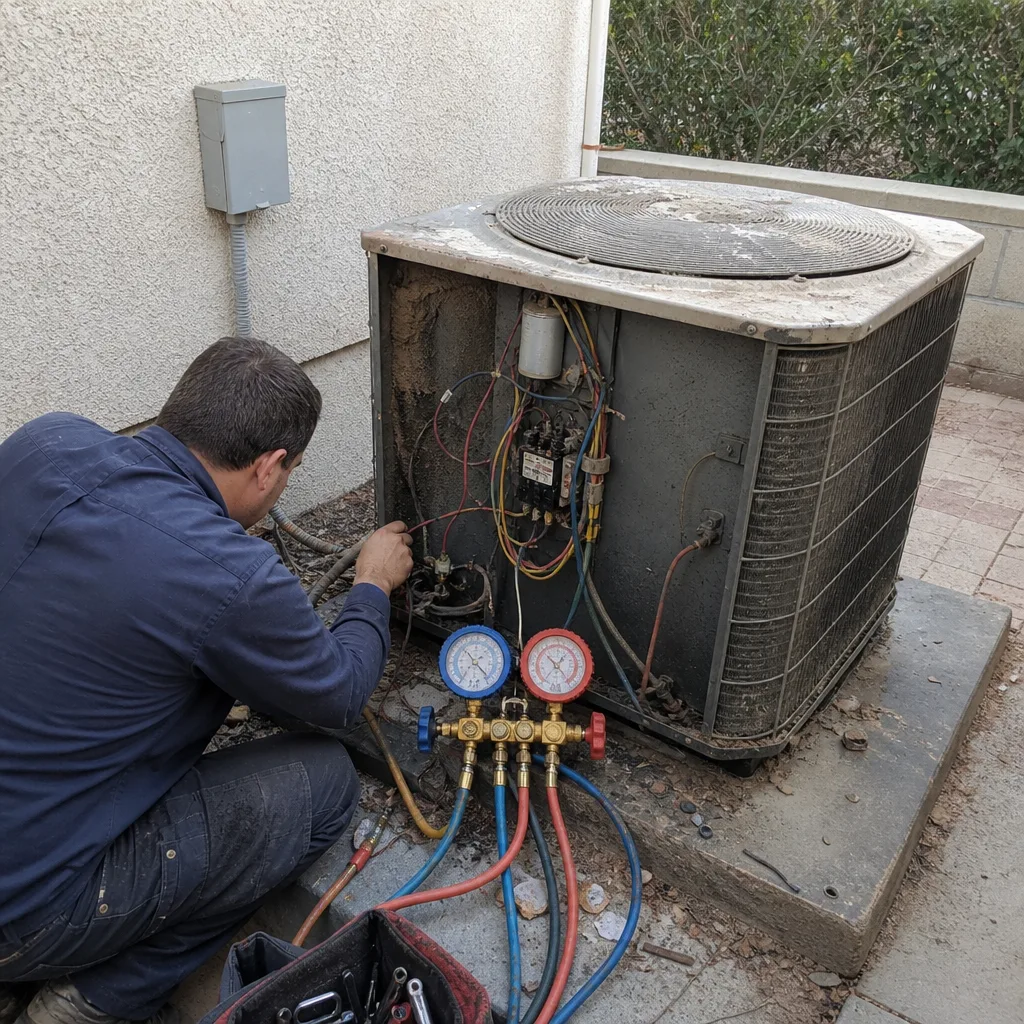
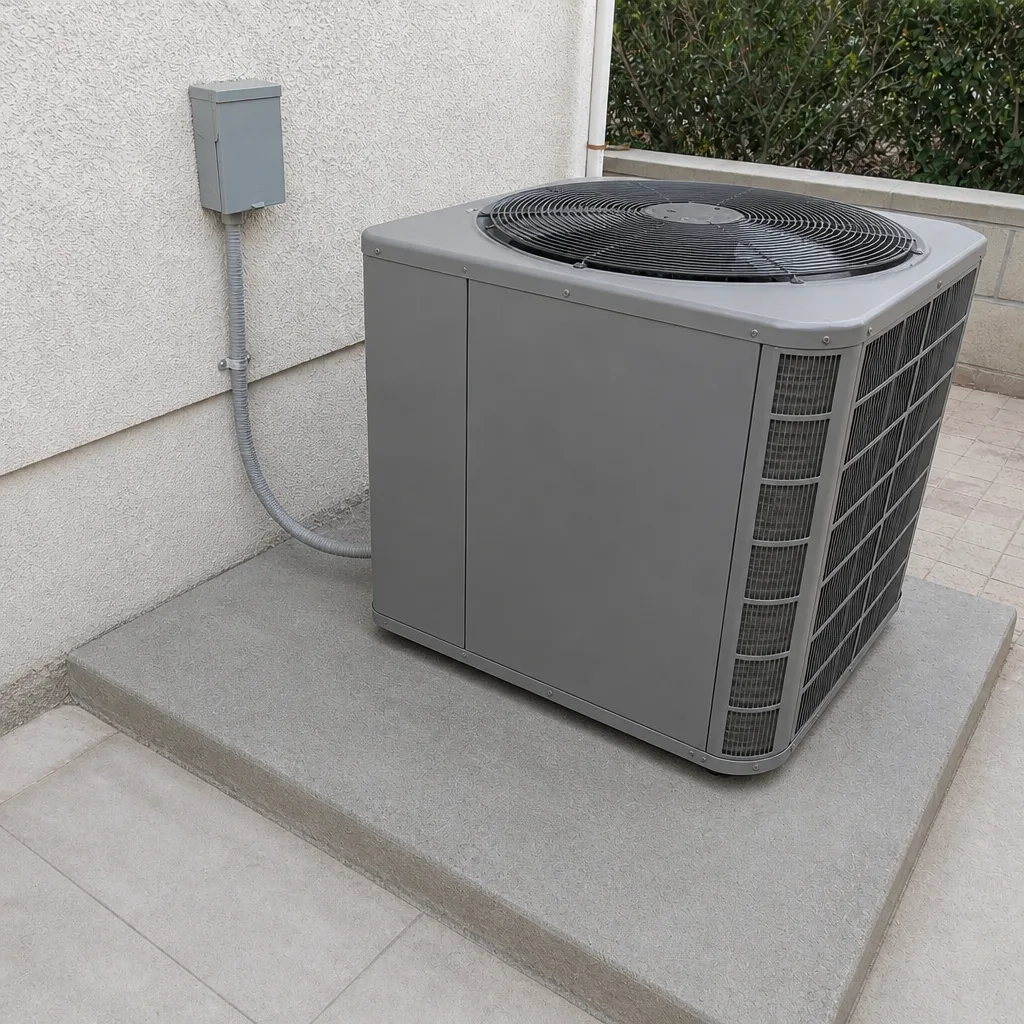
See the difference
 Before
 After
 Before
 After
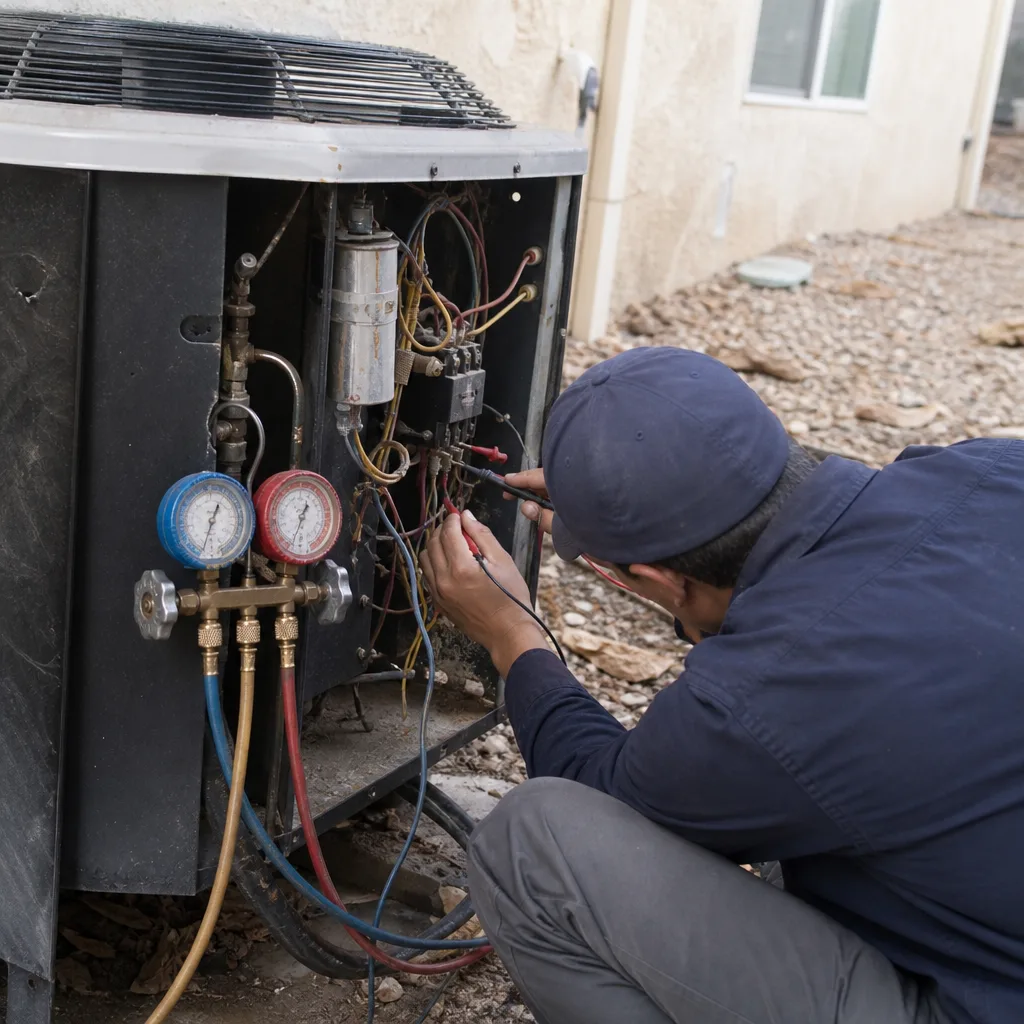 Before
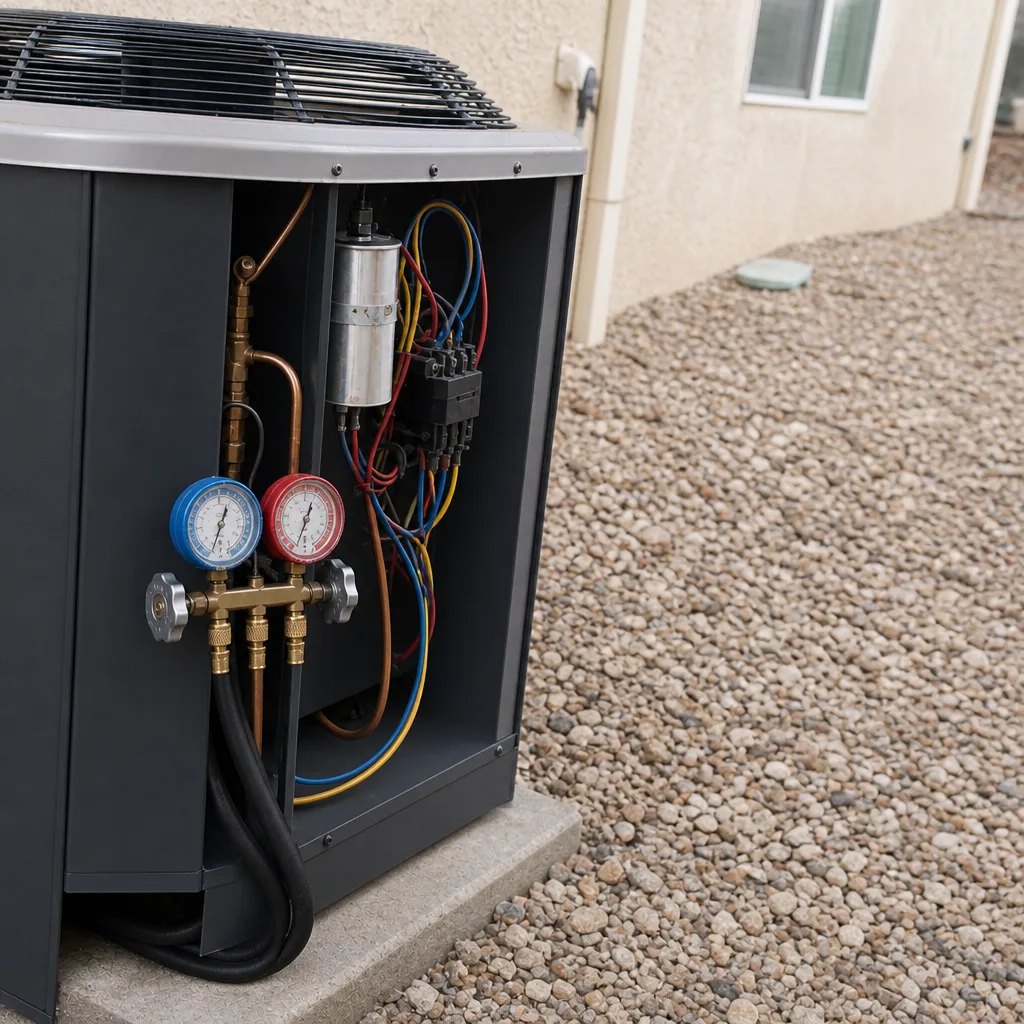 After
Frequently Asked Questions
October is the best month for a full inspection, and April is the best month for pre-season service. October catches the wear from the heavy cooling season while the system is still mostly idle. April clears the system before the first heat wave and before the May service queue builds. Doing both gives a Summerlin system the two-point check its climate actually calls for.
Yes, and it’s a real but short heating season. Summerlin homes frequently heat with a heat pump rather than a furnace, and the components that fail first – the reversing valve, the defrost cycle, and the charge under heating load – aren’t checked during a standard cooling maintenance visit. A heat-pump check in November or December catches those before the coldest mornings arrive.
High-wind dust events. A dust event can load a filter and pack a condenser coil in a single afternoon, which is much faster than a monthly filter schedule catches. After any high-wind dust event during July through September, check the filter and the outdoor unit, and call if the system is running longer or blowing warmer than before the event.
Foothill homes tend to see wider temperature swings and more system cycling than homes on the flatter valley floor. That can add wear on capacitors and contactors over time, which makes the October inspection more valuable, not less. A technician can adjust the care plan based on the specific lot, sun exposure, and landscape during the visit.
It’ll usually miss the two windows that matter most in Summerlin. A generic four-season plan assumes a mild summer and a real winter, and neither fits here. A care plan built for Summerlin’s actual pattern – heavy cooling load, short heating load, two narrow transition windows – catches the failures the national template misses.
We service nine of the dominant brands, including Goodman, Rheem, York, and Daikin. Our diagnostic process is brand-neutral: technicians diagnose the actual condition of the system rather than steering toward a specific manufacturer. That’s the point of our AC Repair Summerlin approach – the diagnosis should be about your system, not a preferred label. Call (833) 317-1621 for a free estimate; we answer 24/7, with fast dispatch from 7am to 7pm, Sunday through Friday.
The Bottom Line
Summerlin doesn’t run on a four-season HVAC calendar. It runs on a heavy cooling season, a short heating season, and two transition windows – October and April – where the real value of maintenance lives. October catches what summer did to the system while it’s still cheap to fix. April clears the system before the heat and the service queue arrive. Winter calls for a heat-pump check that a standard cooling tune-up never covers, and the July-to-September monsoon window calls for post-dust-event checks most guides don’t mention. Build your care plan around those four windows, and your system has a much better chance of making it through next summer without an emergency call. When it’s time to schedule service, call (833) 317-1621 for a free estimate.
Written by the team at AC Repair Summerlin.