
Last updated November 18, 2026
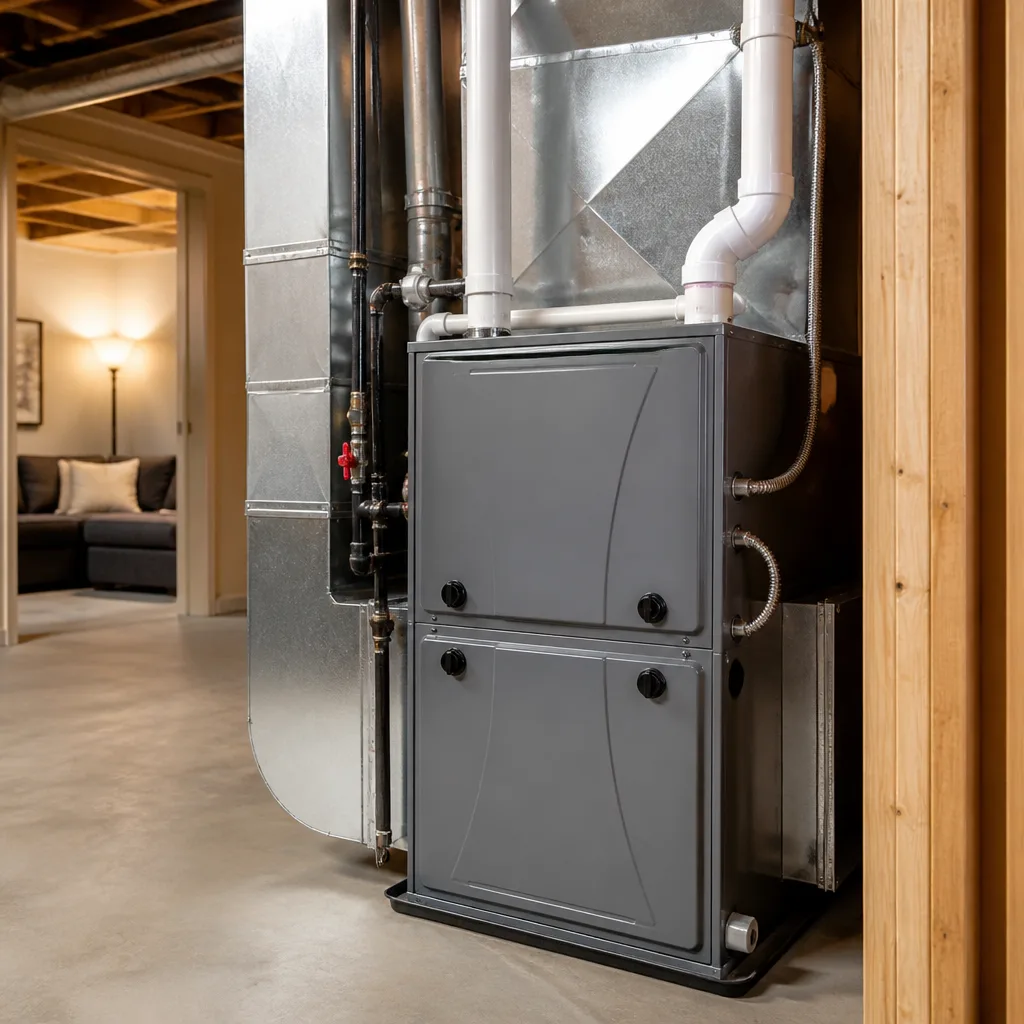 Furnace & heating
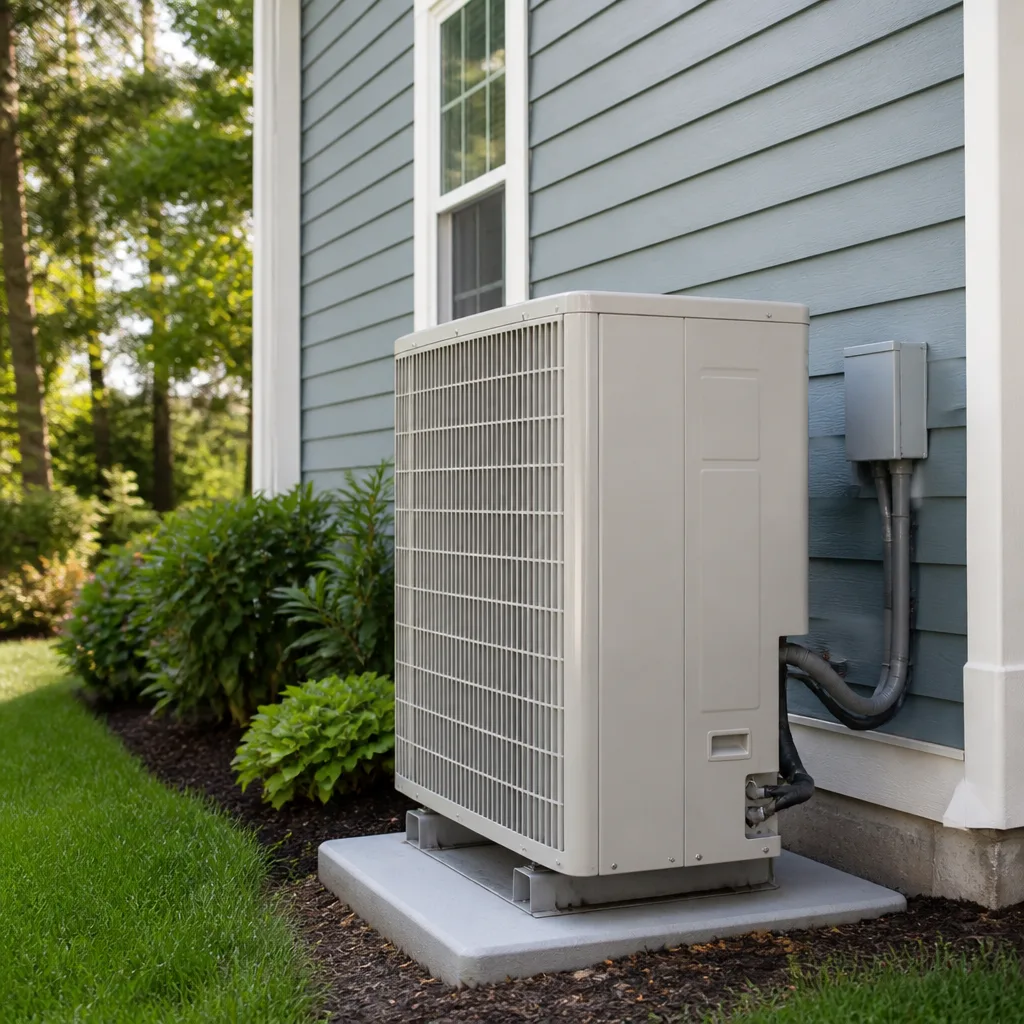 Heat pumps
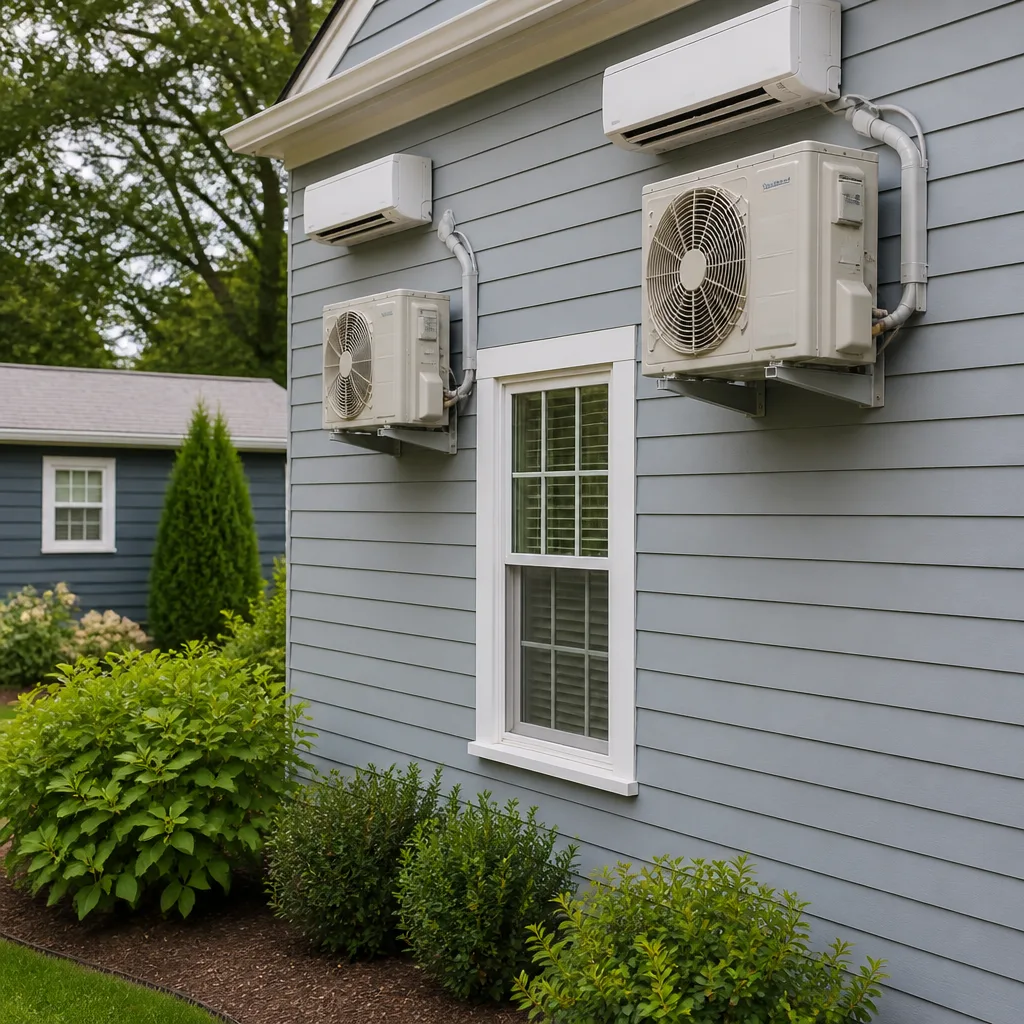 Ductless mini splits
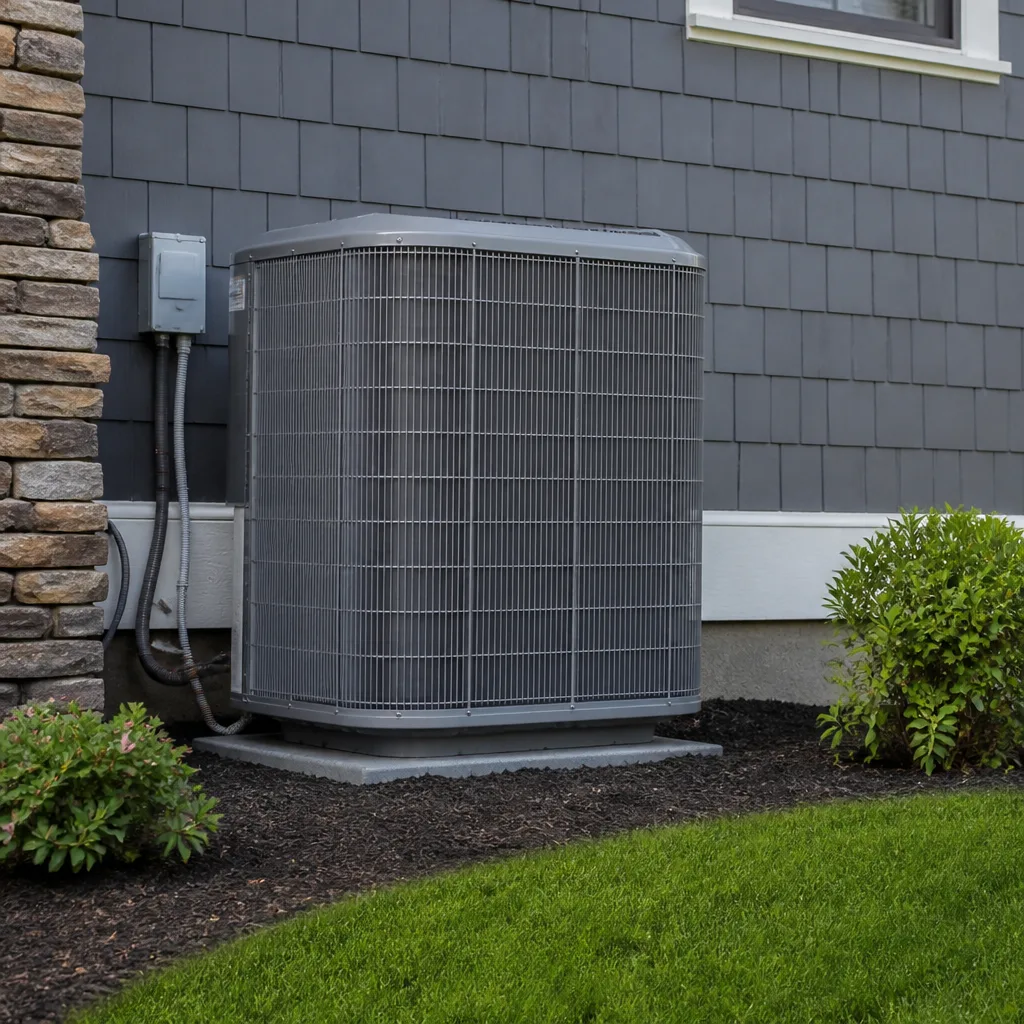 Carrier
 Trane
 Goodman
Seasonal tune-up and full diagnostic on your Carrier, Trane, or Goodman system - readings shown to you before any repair is proposed
Diagnosis first, numbers second - you approve the repair price before a single part goes in.
Get your free estimateThe Complete AC Repair Guide for Summerlin Homeowners
Most AC advice you’ll read online was written for a generic American suburb with four mild seasons. Summerlin isn’t that place. The system on your wall here runs under a load that would be considered a stress test almost anywhere else, and it runs that way for months. Summerlin recorded 147 days above 90°F in 2023 – that’s not a heat wave, that’s the operating condition your AC was purchased to survive. A repair guide written for a mild climate will tell you to check your filter twice a year and call it maintenance. This one won’t.
What follows is a full map of the repair lifecycle we see in Summerlin homes: what actually breaks first, why the local water matters more than most homeowners realize, how to read a technician’s diagnostic report without getting talked into anything, and how to verify the fix before the truck leaves your driveway. It’s long. It’s meant to be.
Quick Answer
AC repair in Summerlin usually starts with one of three failures: a capacitor, a refrigerant leak, or a clogged condensate drain, and the cost of the repair depends on which one you’re facing and how long it’s been ignored. A well-maintained system in this climate typically needs its first meaningful repair somewhere between year seven and year twelve, but the 110°F sustained load here compresses that timeline if the system isn’t serviced. Diagnosing early and repairing rather than replacing is almost always the cheaper path, and a written estimate should tell you exactly which failure you’re paying to fix.
Styles & brands we work with
- AC installation
- Furnace & heating
- Heat pumps
- Ductless mini splits
- Carrier
- Trane
- Goodman
Table of Contents
- Why Summerlin’s Climate Breaks AC Systems Differently
- The Failure Sequence: What Breaks First, Second, and Third
- Hard Water, Scale, and the Coil Problem Nobody Warns You About
- How to Read a Technician’s Diagnostic Report
- Two More Seasons or Seven? How to Tell Which Repair You’re Buying
- Post-Repair Verification: What to Check Before the Truck Leaves
- Repair or Replace? The Decision Framework
- Maintenance That Actually Prevents Breakdowns Here
Why Summerlin’s Climate Breaks AC Systems Differently
An air conditioner is essentially a heat mover. It takes heat from inside your house and dumps it outside. The harder it has to work to dump that heat, the faster every component in the system wears. In Summerlin, the outdoor unit is dumping heat into air that may already be sitting at 110°F or higher for weeks at a stretch. That’s a fundamentally different job than the same unit faces in a place where the hottest week of the year tops out at 95°F.
The practical results are predictable:
- Compressors run longer per cycle. A unit that would satisfy a house in 20 minutes in a milder climate may run 45 minutes or more here. That’s more compressor hours on the clock every single day of cooling season.
- Capacitors and contactors cycle far more often. These are the two cheapest parts in the system and the two that fail most, and their failure is tied almost entirely to cycle count and heat exposure.
- Refrigerant pressures run higher. Higher head pressure accelerates wear on the compressor and puts stress on every fitting and braze joint in the refrigerant circuit.
- Drain lines work harder. A system that pulls a lot of moisture out of a house produces more condensate, and in this dry climate the condensate mixes with dust in the drain pan to form a sludge that clogs traps faster than most homeowners expect.
None of this means your system is doomed. It means the maintenance and repair schedule you follow should be tighter than what a generic guide would suggest. If you’re in one of the newer Summerlin neighborhoods – The Ridges, Red Rock Country Club, Summerlin West – you may have a system that’s only a few years old and already showing the early signs of this accelerated wear. The age on the sticker is less informative than the run hours it’s piled up.
The Failure Sequence: What Breaks First, Second, and Third
In our experience servicing Summerlin homes, the failures follow a surprisingly consistent order. Knowing the sequence helps you understand whether a repair estimate sounds plausible or padded.
First to fail: capacitors and contactors
The run capacitor helps the compressor and fan motors start and run smoothly. Under heat and constant cycling, the capacitor’s internal electrolyte degrades. When it fails, the system often won’t start at all, or starts and then trips the breaker. A failed capacitor is the single most common summer repair call we handle, and it’s also the cheapest. This is a genuine repair – not a symptom of a bigger problem – and it usually buys several more seasons.
Second: refrigerant leaks at fittings and the evaporator coil
Refrigerant circuits are sealed systems. If refrigerant is low, it leaked somewhere, and the leak doesn’t fix itself. High head pressure and repeated thermal expansion put stress on every joint. The most common leak points are the flare fittings at the outdoor unit, the Schrader valves, and eventually the indoor evaporator coil. Here’s the critical point: a system that’s low on refrigerant does not just cool poorly – it runs longer, which accelerates wear on everything else. A small leak that gets ignored for a full season can turn a $250 fitting repair into a $1,800 coil replacement.
Third: blower motor and compressor failure
These are the big-ticket items, and by the time they fail, the question shifts from “how do we repair this” to “how much longer is this system worth investing in.” A blower motor failing at year nine on a well-maintained system is a repair. A compressor failing at year nine on a system that has never been serviced is usually a signal to look at replacement.
If you’re hearing grinding from the indoor unit, smelling a burning odor, or noticing the breaker tripping repeatedly, those are signs of a component that has already been failing for a while. Call us before the failure becomes a full system shutdown – AC repair in the early stage is almost always less expensive than a repair after a complete failure.
Hard Water, Scale, and the Coil Problem Nobody Warns You About
This is the section most AC guides skip entirely, and it’s the one that matters most in Summerlin. The municipal water supply here ranks among the hardest in the country, and that hardness doesn’t just show up on your showerhead. It shows up inside your air conditioning system.
What hard water does to an AC system
Two components are directly affected by water quality:
- Condensate drain line and trap. Condensate is essentially distilled water, so scale buildup in the drain line is minimal directly from the water itself. But dust pulled in from the dry Summerlin air mixes with the condensate in the drain pan and forms a paste. That paste calcifies over time, and once the trap clogs, the pan overflows. Water damage from an overflowing condensate pan is one of the more common “hidden” repair costs we see.
- Evaporator coil (when it needs cleaning). If your system has ever had its coil cleaned with hard water or had the coil surface exposed to splash from nearby plumbing, mineral deposits form on the fins. Scale is an insulator – it prevents the coil from transferring heat efficiently, which forces the compressor to work harder and run longer.
Why this is worse here than in other desert cities
Not every desert city has this problem to the same degree. The combination of very hard water, fine desert dust that’s constantly airborne, and sustained near-continuous cooling season creates a scale-and-sludge cycle that starts earlier than most homeowners expect. Drain pans in Summerlin homes can accumulate enough material to partially restrict drainage well within a few seasons. This is why we recommend the drain line be flushed during every maintenance visit, not just when there’s a visible problem.
What to check yourself
- Locate the indoor air handler and find the condensate drain pan below the coil.
- Look for standing water, rust, or a white/gray crusty residue in the pan.
- Find the drain line’s exterior termination point and confirm water is dripping – not just occasionally, but during any active cooling cycle.
- If the drain line termination looks dry while the system is running, the line or trap is likely restricted. That’s a call-now situation, not a wait-and-see one.
We service every major brand on the market – Rheem, York, Daikin, Bryant, and the rest of the nine major manufacturers – and the drain problem is consistent across all of them. It’s not a brand issue. It’s a place issue.
How to Read a Technician’s Diagnostic Report
Here’s where most homeowners lose confidence. A technician hands over a clipboard or a tablet with a list of findings, some of them technical, and the natural reaction is to wonder whether everything on the list is necessary. Our approach is brand-neutral – we diagnose what’s actually broken and recommend the repair, not the manufacturer’s preferred part. But you shouldn’t have to take any technician’s word for it, including ours. A good diagnostic report should be readable. Here’s what to look for.
What a diagnostic report should contain
- Static pressures and temperature split. A properly running system should show a measurable temperature difference between the return air and supply air. If the technician didn’t measure this, the diagnosis is a guess. A healthy split on a Summerlin system in peak heat usually falls in a specific range, and if the technician doesn’t mention it, ask.
- Refrigerant pressures and superheat/subcool. These confirm whether the system is properly charged. If refrigerant is added, the technician should also have looked for a leak – not just topped off the charge and moved on.
- Electrical readings on the capacitor, contactor, and motor. Capacitor microfarad readings should be within the manufacturer’s spec. A capacitor that’s below spec is failing even if the unit is running.
- Visual condition of the coils and drain pan. A report that doesn’t mention the drain pan condition in a Summerlin home is incomplete.
Which findings can wait, and which can’t
This is the part that matters economically. Some findings are cosmetic or deferred-friendly. Some are not.
- Can usually wait: slightly dirty outdoor coil (can be scheduled for cleaning), minor cosmetic rust on the cabinet, a filter that needs replacing.
- Should not wait: a failing capacitor, refrigerant leaking at any fitting, a partially clogged drain line, a blower motor drawing high amps, or a compressor compressor with anything abnormal in its electrical signature. Each of these can cascade into a bigger failure within days.
If a technician recommends replacement on the same visit as the diagnosis, ask which specific component has failed and how long it’s been failing. A failed capacitor is not a replacement trigger. A failed compressor on an eleven-year-old system usually is. The distinction is not subtle – if the technician can’t explain which category the repair falls into, that’s your signal to get a second opinion.
Two More Seasons or Seven? How to Tell Which Repair You’re Buying
Every AC repair falls into one of two categories, and the difference between them is worth thousands of dollars over the life of your system.
Repairs that buy about two more seasons
These are repairs that restore function without addressing the underlying wear. They’re appropriate when the system has enough lifespan left that buying time is the smart move. Examples:
- Replacing a failed capacitor or contactor on a system with otherwise good refrigerant pressures.
- Sealing a small refrigerant leak at a fitting on a system whose compressor is still running clean.
- Flushing a clogged drain line on an otherwise healthy system.
These repairs are cheap (relative to replacement) and they work. But they don’t slow the system’s underlying decline. If your unit is at year ten and showing multiple small issues, you’re likely buying time and should start planning for replacement in the next one to three cooling seasons.
Repairs that buy about seven more seasons
These are repairs that address the root cause of the wear and reset the system’s clock, at least partially. Examples:
- Replacing a failing blower motor or condenser fan motor – the new motor is OEM-grade and resets the wear clock on that component.
- Replacing an evaporator coil that’s been leaking, along with an inspection of the refrigerant charge and line set.
- Replacing a compressor on a system that’s otherwise young and well-maintained.
The honest question to ask any technician is this: “If I make this repair, how many more cooling seasons should I reasonably expect from the rest of the system?” A technician who can’t give you a straight answer, or who deflects with a pitch about a new system, is steering you. A technician who tells you “this repair gets you through this summer and probably the next one, but plan on replacement by year twelve” is being straight with you. That’s the answer you want.
Post-Repair Verification: What to Check Before the Truck Leaves
You’ve paid for a repair. Before the technician drives away, do these checks yourself. This isn’t about distrusting the technician – it’s about confirming that what you paid for actually happened.
- Turn the system on and time the cool-down. With the thermostat set to a normal cooling setpoint and the system running, feel the supply air at a vent. It should feel noticeably cooler than the room air within a few minutes. If it doesn’t, the repair may not have fully addressed the problem.
- Check the temperature split with a simple thermometer. A cheap digital thermometer held at the return vent and then at a supply vent should show a meaningful difference. If the technician quoted you a temperature split, verify it matches what you’re measuring now.
- Confirm the condensate drain is flowing. Go to the drain line’s exterior termination and confirm water is dripping steadily while the system runs.
- Listen for the compressor and fan. Both should start cleanly without a hard clunk or a persistent rattle. A new noise after a repair is a call-back invitation, not a “give it a few days” situation.
- Check the breaker panel. The breaker should be on and not tripping. If it trips again shortly after the technician leaves, call immediately – don’t wait for it to “settle.”
- Get the parts replaced, in writing, on the invoice. A repair invoice should name the component replaced and, where applicable, the new part’s capacity rating (e.g., capacitor microfarads). If it doesn’t, ask for it before you sign.
If any of these checks come up short, call back. A reputable company will return to verify. If the technician declines to give you a written invoice listing the parts, that’s a signal to look elsewhere next time – and it’s exactly the kind of thing a specialist who is not stretched across plumbing and electrical work is less likely to do.
Repair or Replace? The Decision Framework
The threshold question everyone asks in July is whether to repair or replace. There’s no single right answer, but there is a framework that consistently produces good decisions.
Lean toward repair when:
- The system is under eight to ten years old and has been maintained annually.
- The failed component is a wear item (capacitor, contactor, blower motor, fan motor).
- The refrigerant circuit is intact and pressures are within spec.
- The repair costs a small fraction of a new system.
Lean toward replacement when:
- The system is twelve years old or older, regardless of the immediate problem.
- A compressor has failed on a system that’s already had refrigerant leaks.
- You’ve had more than two repairs in the same cooling season.
- You’re facing a repair bill that represents a substantial share of what a new system would cost, and the existing system is showing other wear signs.
The question worth asking
Ask any technician: “If this were your system, would you repair it or replace it, and why?” A technician who recommends a AC installation without ever demonstrating why repair isn’t the better call is selling, not diagnosing. We service all nine of the major brands, and a properly installed system from any of them will do the job. Brand neutrality isn’t marketing – it’s the practical reason we can tell you “your existing Rheem is worth repairing” without it costing us a sale.
When replacement is the right call, the work should be load-calculated, ordered, and scheduled – never rushed. We follow the same three-service model we always have: repair, installation, maintenance. We don’t do plumbing or electrical, and we don’t subcontract your AC to a generalist.
Maintenance That Actually Prevents Breakdowns Here
Two things are true about maintenance. It prevents the repairs that matter, and it’s not the same as “add some refrigerant and go.” A proper maintenance visit on a Summerlin system involves checking things most homeowners have never thought about.
What a real maintenance visit includes
- Condensate drain flush. Not a rinse – a flush. The drain pan and trap should be checked and cleared of the dust-sludge buildup that forms in this climate.
- Capacitor and contactor testing against spec. The technician should measure and report the actual microfarad value, not just visually inspect.
- Refrigerant pressures and superheat/subcool measurements. A low reading should trigger a leak search, not a top-off.
- Coil cleaning, indoor and outdoor. Dust in the outdoor coil is an insulator. Cleaning it restores efficiency and lowers head pressure.
- Electrical readings on the blower motor and compressor. Amp draw tells the technician whether these components are working harder than they should be.
- Written report of findings. If a maintenance visit doesn’t produce a written report, it wasn’t a maintenance visit. It was an appearance.
How often
In most parts of the country, an annual check is enough. In Summerlin, an annual check focused on the coil, capacitor, refrigerant charge, and drain is the minimum. Given that your system runs the equivalent of a full summer season in a milder climate over just a few months, a mid-season check before the worst weeks of July and August is worth the small cost. If your system is older than ten years, plan on two visits per cooling season.
Our technicians are not paid on what they sell. That’s a deliberate choice, and it’s the only way a maintenance visit means anything. A maintenance plan protects the investment you’ve already made; it isn’t an add-on to sell you something you don’t need. We maintain every system the way we’d maintain our own.
Common Mistakes to Avoid
- Topping off refrigerant without finding the leak. Low refrigerant means a leak, and a leak doesn’t close itself. Adding refrigerant without a leak search just delays the bigger repair by a few months and puts the compressor at risk.
- Skipping the drain line in the name of “preventive maintenance.” In Summerlin, drain clogs are a top-three repair cause, and they cause water damage on top of the AC repair. Have the drain line flushed during every visit, not just when it acts up.
- Waiting until July to schedule maintenance. The system will survive a mild May check-up; it may not survive a mid-July failure. Scheduling service before the peak load hits means you find problems before they become emergencies.
- Assuming a new system means no maintenance for a decade. Hard water and dust don’t care how new your condenser is. New systems in Summerlin need the same annual drain and coil care as old ones, often sooner.
- Accepting a “same-day repair” quote without a written estimate. Prices vary by job, and the written estimate is what sets the final number. If you didn’t get one before work started, ask for it.
- Letting a technician talk you into replacement on the same visit as a minor diagnosis. Capacitors fail. Contactors fail. Those are wear parts, not system death sentences. Get a second opinion if the recommendation feels disproportionate.
- Ignoring the first “small” issue of the season. The first warning sign – a slightly weak cold, a little more run time – is exactly when a repair is cheapest. Waiting for the system to fail fully usually doubles the repair cost.
See the difference
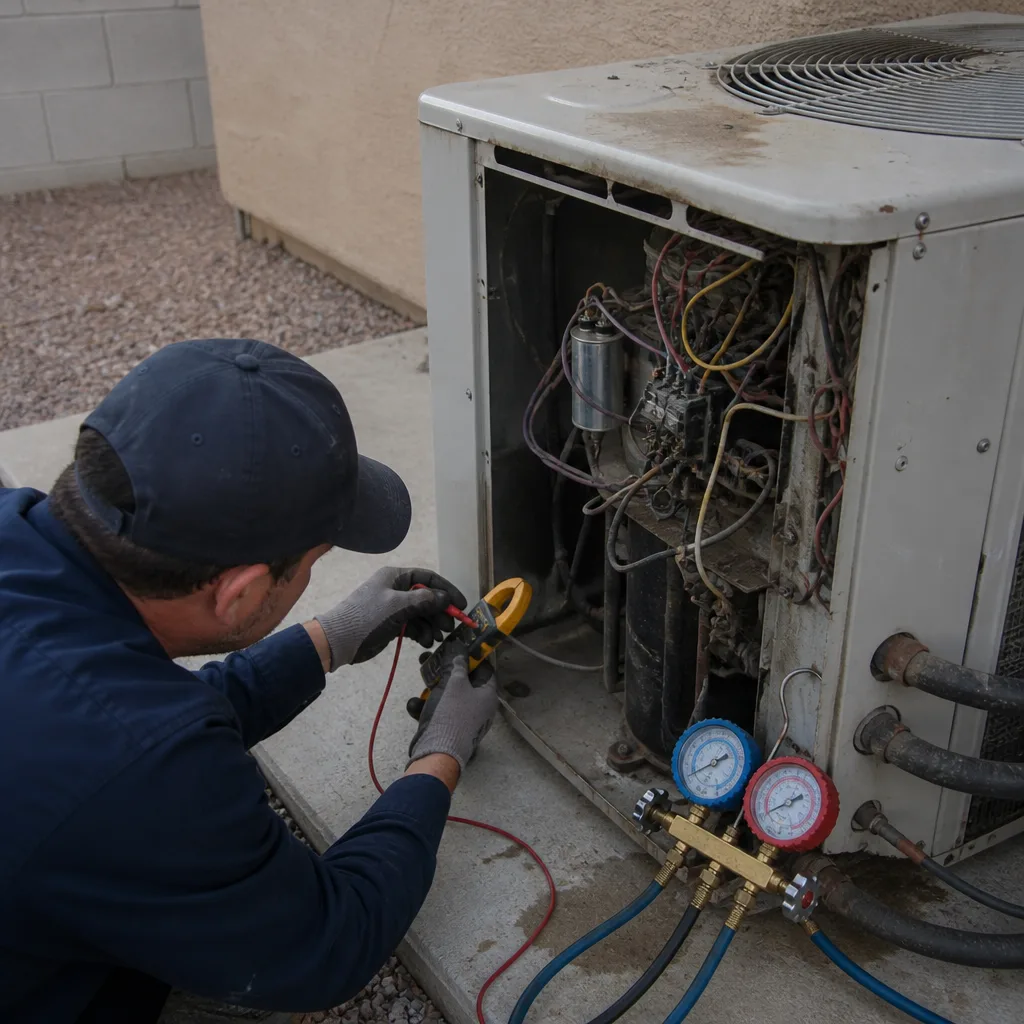 Before
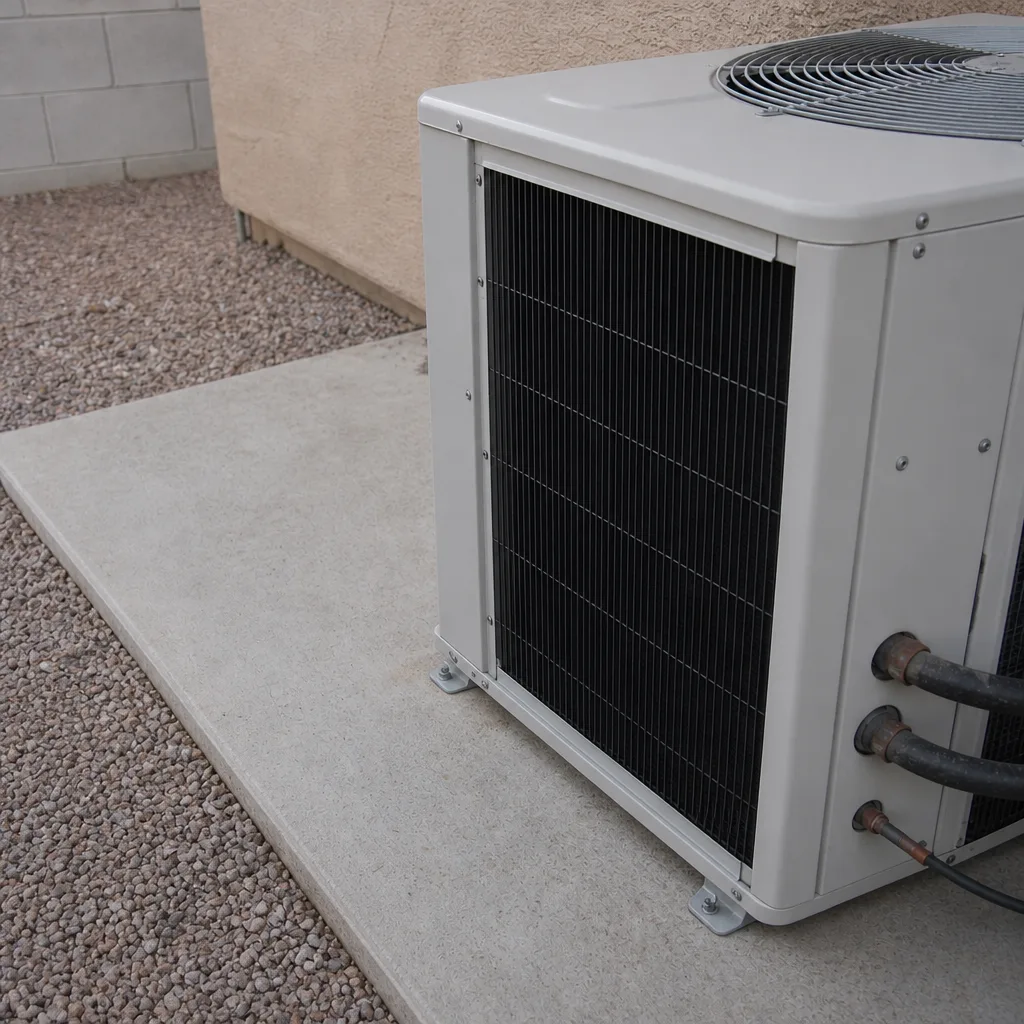 After
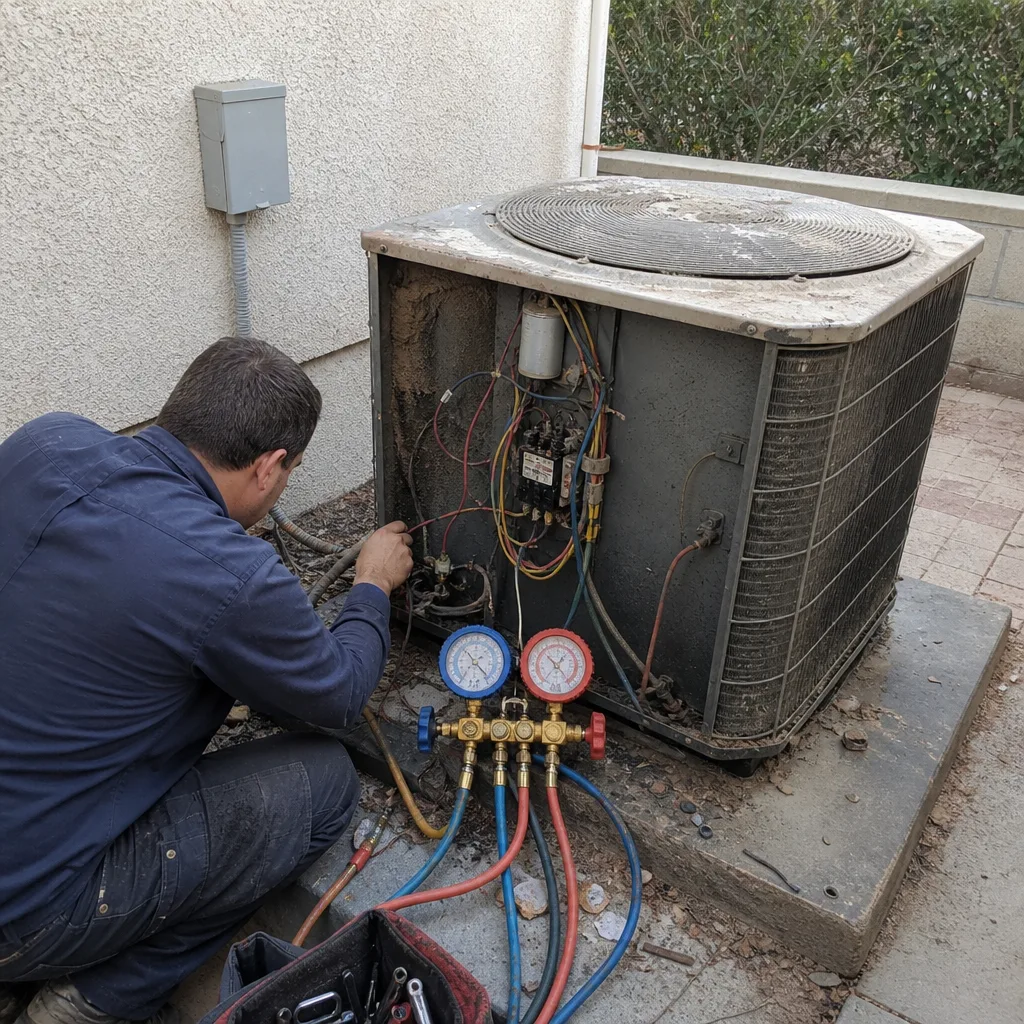 Before
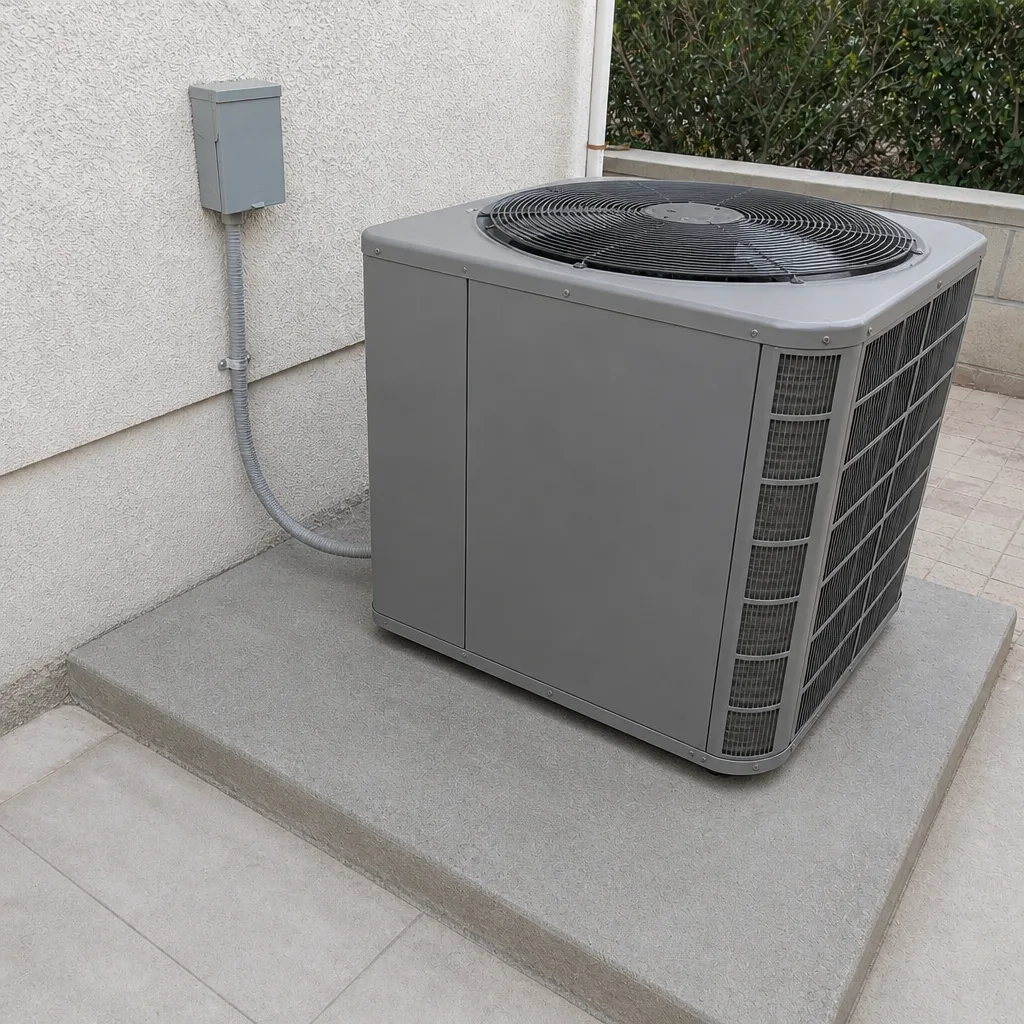 After
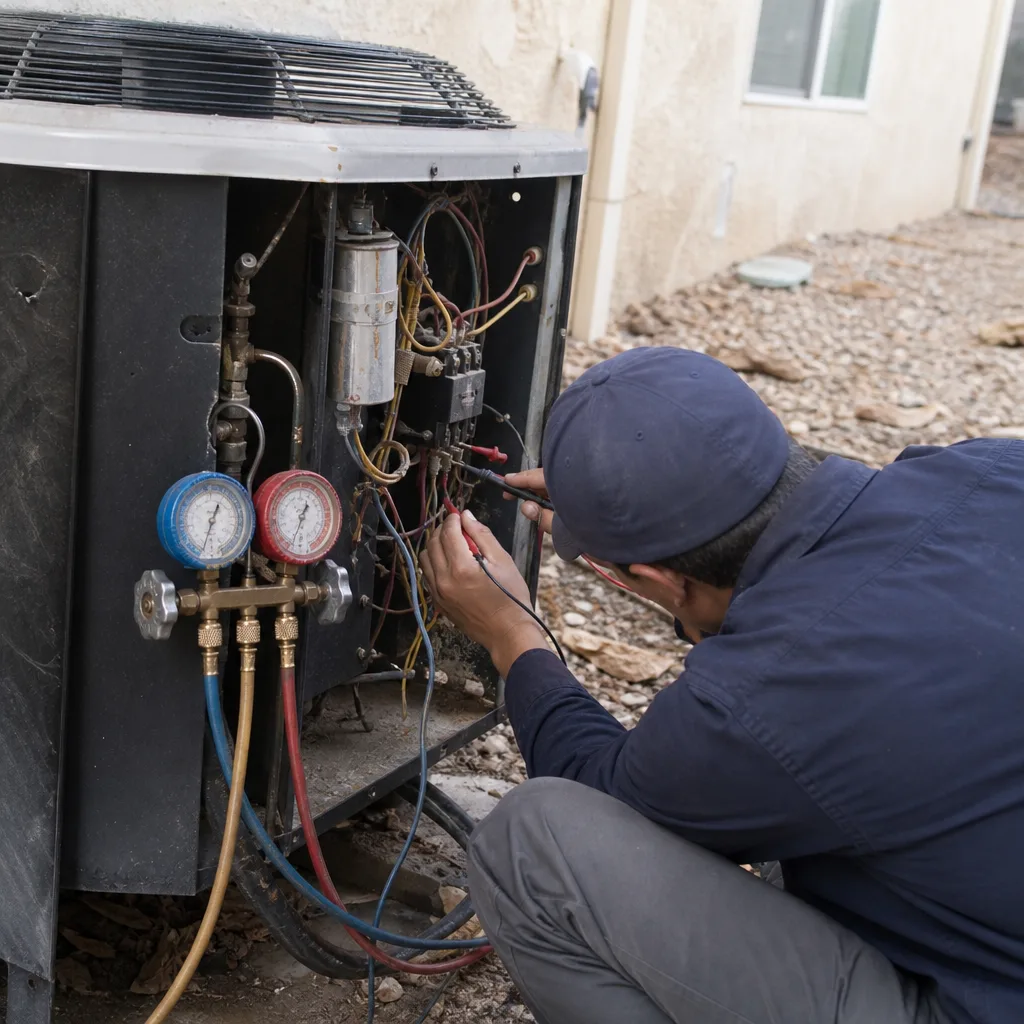 Before
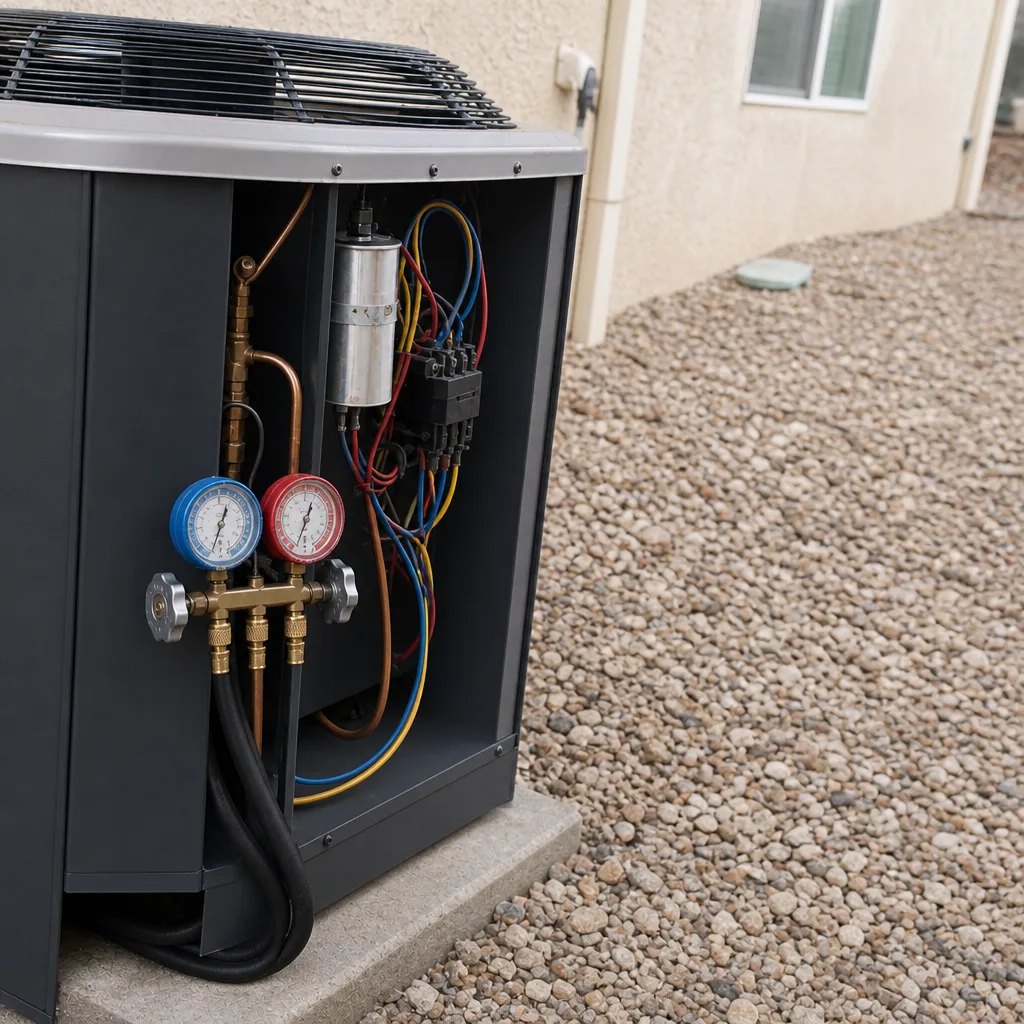 After
When to Call a Professional
Some things are worth watching for a day. Some aren’t. Call a technician immediately if you notice any of the following: the system won’t start at all, the breaker trips repeatedly after being reset, you hear grinding or screeching from the indoor air handler, you smell a burning odor, water is pooling around the indoor unit, or the system is clearly running but isn’t cooling the house. None of these are DIY territory. Capacitors hold a stored charge that can cause serious injury, refrigerant systems are sealed and require licensed handling, and any work inside the electrical panel or on the compressor circuit can kill you if you don’t know what you’re doing. This is genuinely dangerous territory, and it’s not a place to learn by watching a video.
AC Repair Summerlin offers free estimates in Summerlin – call (833) 317-1621. We answer 24/7. Fast dispatch from 7am to 7pm, Sunday through Friday.
Frequently Asked Questions
Typical AC repairs in Summerlin fall in the range of a few hundred dollars for a capacitor or contactor replacement, several hundred for a refrigerant leak repair, and more for a blower motor, coil, or compressor. The written estimate is what sets the final price, and any honest diagnostic should explain which failure you’re paying to fix. Call (833) 317-1621 for an exact quote – estimates are free.
In many cases, yes. Capacitor, contactor, drain line, and small leak repairs can often be handled on the same visit. Larger repairs that need a specific part may take longer. Call (833) 317-1621 – we answer 24/7, and we’ll give you a straight answer on timing before we book.
A frozen coil almost always means restricted airflow or low refrigerant, and low refrigerant is far more common here because of the sustained pressures the system runs under. Frozen coils should be switched off and thawed, not forced – running a frozen system can damage the compressor. Call for a diagnosis before attempting to restart it.
Yes. In Summerlin, even newer systems need annual drain and coil service because dust and water hardness don’t care how old the equipment is. The maintenance plan is about protecting the investment you’ve already made, not about an upsell. Call (833) 317-1621 to schedule.
We service nine of the industry’s major brands: Carrier, Trane, Lennox, Goodman, Rheem, York, Daikin, Bryant, and American Standard. You won’t hit a “we don’t work on that brand” dead end. If you have a brand of equipment from one of those nine, we can diagnose and repair it.
Lean toward repair if your system is under eight to ten years old and well-maintained. Lean toward replacement if it’s twelve years or older, has had repeated refrigerant leaks, or has had more than two repairs this cooling season. Ask the technician: “If this were your system, would you repair or replace, and why?” Call (833) 317-1621 for a free estimate and a straight answer.
The Bottom Line
Summerlin’s climate is hard on AC systems in ways a generic repair guide won’t tell you. The 147 days above 90°F in 2023 is the operating condition, not the exception – which means capacitor and contactor wear happens faster here, refrigerant leaks put more stress on the compressor, and hard water means the drain line needs attention every single season. Repair early, use a written estimate, ask whether the repair buys two more seasons or seven, verify the fix before the technician leaves, and don’t let the first “small” problem of the season sit until it becomes a full failure. Our technicians have up to 12 years of experience, we work on all nine of the major AC brands, and we do exactly three things: repair, installation, and maintenance. That’s the whole list.
If your system is acting up right now, call AC Repair Summerlin at (833) 317-1621 for a free estimate. We answer 24/7. Fast dispatch from 7am to 7pm, Sunday through Friday.
Written by the team at AC Repair Summerlin.