
Last updated November 18, 2026
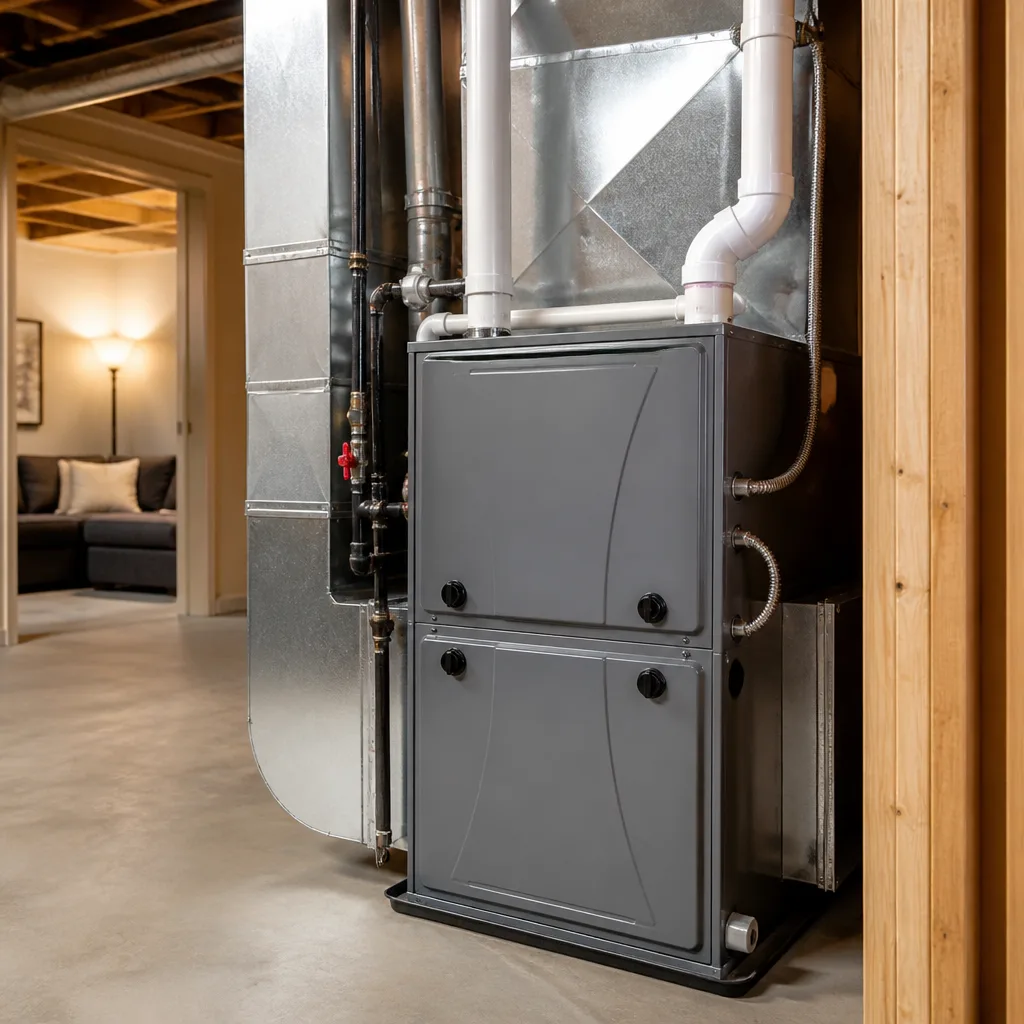 Furnace & heating
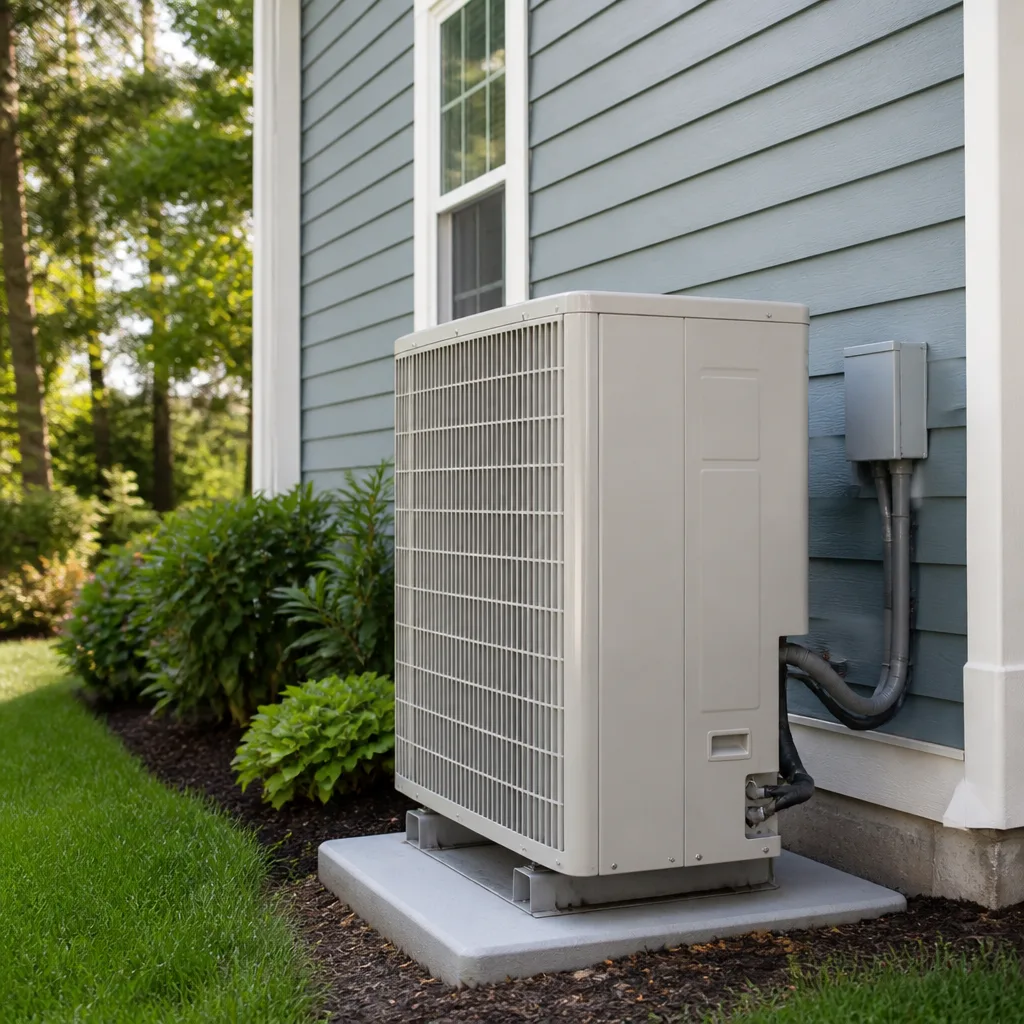 Heat pumps
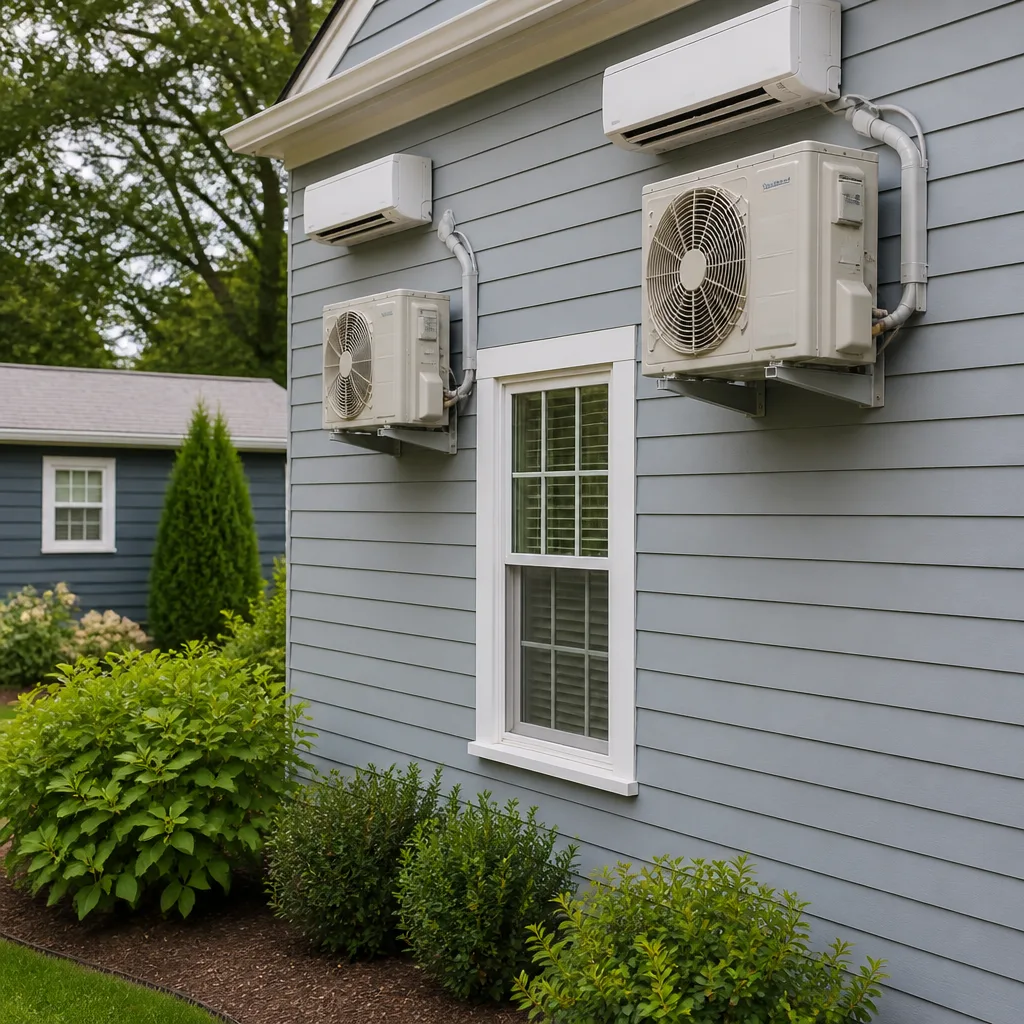 Ductless mini splits
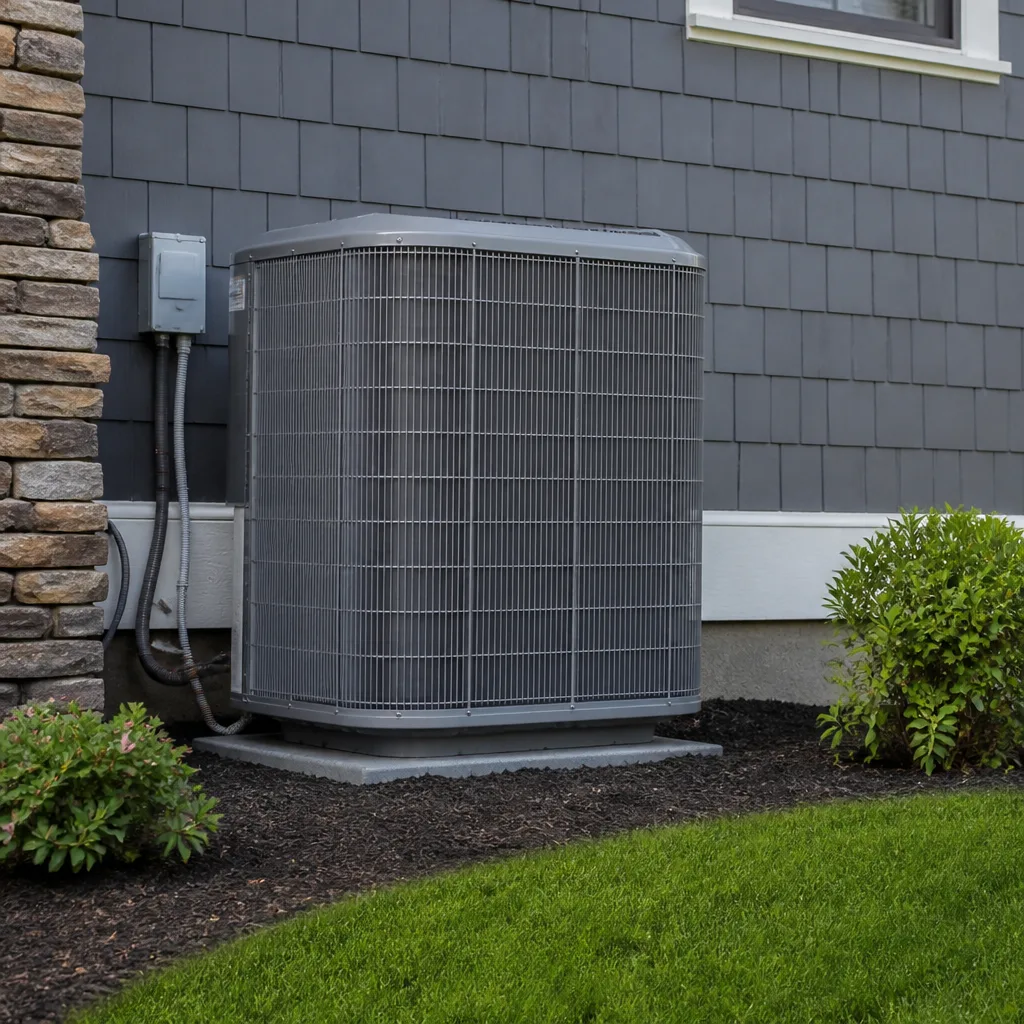 Carrier
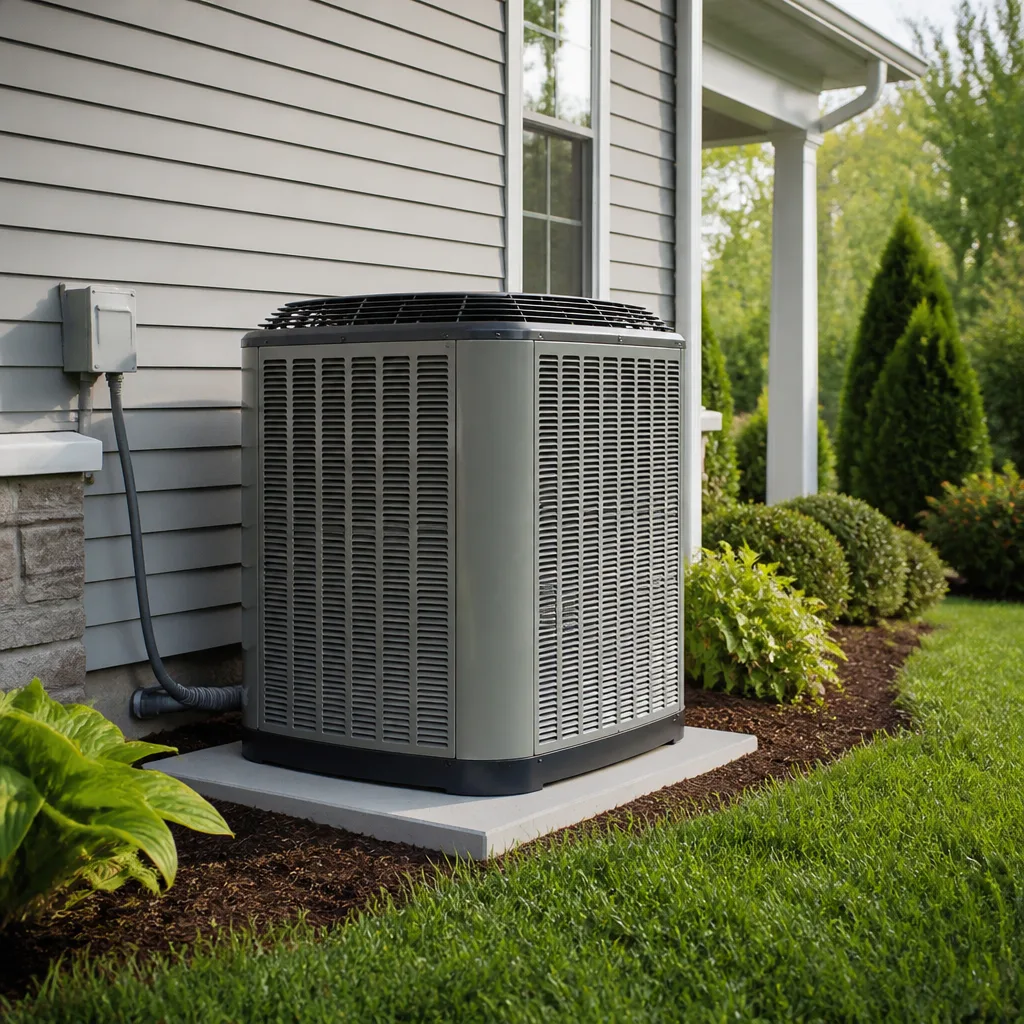 Trane
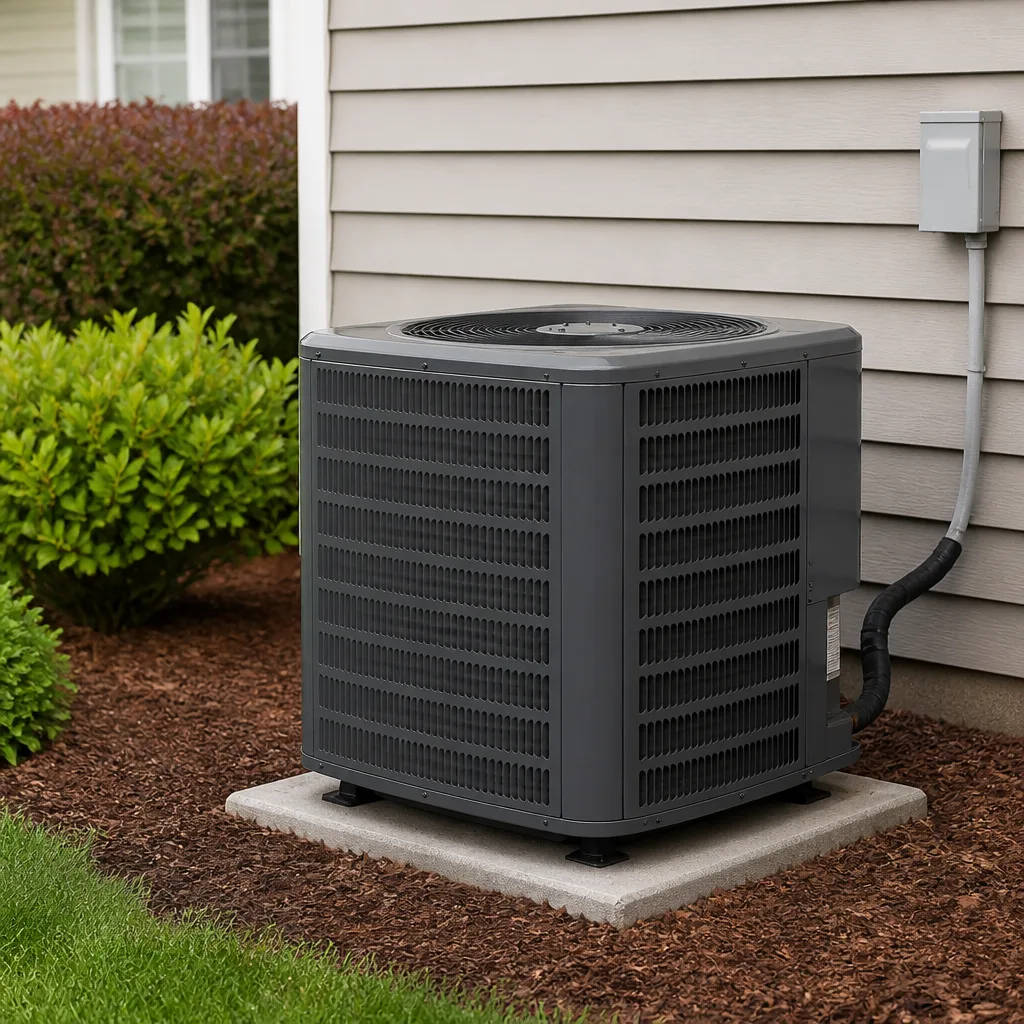 Goodman
Seasonal tune-up and full diagnostic on your Carrier, Trane, or Goodman system - readings shown to you before any repair is proposed
Diagnosis first, numbers second - you approve the repair price before a single part goes in.
Get your free estimateHVAC Cost Breakdown: The Summerlin Homeowner’s Reference for 2026
Most “average AC replacement cost” figures you’ll find online describe a 3-ton unit in a mild climate. That’s not what sits outside a typical Summerlin house. Homes here commonly need 4- to 5-ton systems to hold up against months of triple-digit heat, and that size jump alone moves the total by $3,000 to $6,000 before a single hour of labor is billed. National averages also ignore what Clark County labor actually runs in 2026, and they rarely account for the premium equipment tiers desert conditions demand. This guide replaces the national numbers with ranges calibrated to Summerlin homes and the local market, so you can read a bid and know what’s real. We’ll cover repair, maintenance, and replacement pricing, how SEER2 ratings pay back at NV Energy rates, what separates a fair bid from a lowball, and the line items most quotes quietly leave out.
Quick Answer
In Summerlin, most homeowners pay roughly $350 to $1,200 for a repair, $180 to $350 for an annual maintenance visit, and $9,500 to $18,000 for a full system replacement in 2026, depending on tonnage, SEER2 rating, and whether ductwork needs work. Repair and maintenance prices are per job and set by a written estimate, and replacement pricing should always arrive as a fixed written quote before any work begins. The ranges in this guide reflect local system-size norms and Clark County labor rates, not national averages.
Styles & brands we work with
- AC installation
- Furnace & heating
- Heat pumps
- Ductless mini splits
- Carrier
- Trane
- Goodman
Table of Contents
- What does AC repair cost in Summerlin?
- What does annual AC maintenance cost, and is it worth it?
- What does a full AC replacement cost in Summerlin in 2026?
- How does SEER2 affect upfront cost versus five-year savings?
- Why do contractor bids for the same job vary so much?
- What hidden costs do most quotes leave out?
- What Nevada rebates and financing options exist for 2026 installs?
- Should you repair or replace your system?
What does AC repair cost in Summerlin?
Most AC repairs in Summerlin fall between $350 and $1,200, with the final number driven by the failed part and how deep the technician has to go to reach it. A capacitor or contactor swap sits at the low end. A blower motor, condenser fan motor, or refrigerant leak search climbs toward the top. Compressor replacement is the outlier and often pushes past $2,000, which is the point where a repair-or-replace conversation makes sense.
The reason local repair prices run above national averages is straightforward. A 4- or 5-ton system working harder for longer in desert heat cycles through components faster, and the diagnosis takes more time because there’s more equipment to check. Clark County labor rates are also higher than the small-market averages those national figures are built from.
Here’s the repair pricing picture in a quick list:
- Capacitor or contactor replacement: $350 to $550
- Blower or condenser fan motor: $600 to $1,100
- Refrigerant leak search and recharge: $500 to $1,200
- Drain line clearing and float switch: $350 to $500
- Compressor replacement: $1,800 to $2,800, often tipping toward replacement
Every one of those numbers is an estimate. The written estimate you receive after diagnosis sets the final price, and you should see it before anyone touches the system. For a full look at how we handle diagnosis and repair, see our AC repair page.
Why Summerlin repairs trend higher than national averages
A system in Summerlin isn’t running a seasonal load, it’s running a marathon. From May through September the equipment cycles nearly every hour of the day, and that constant duty cycle wears motors, capacitors, and compressors faster than the same equipment would wear in a milder market. When a component fails in Summerlin, it’s often failing under real heat stress, and that’s why the diagnostic step matters as much as the repair itself. Our technicians have up to 12 years of experience, and they’re trained to service nine of the industry’s dominant brands, including York, Daikin, Bryant, and American Standard, so a brand mismatch never becomes a dead end.
What does annual AC maintenance cost, and is it worth it?
An annual AC maintenance visit in Summerlin typically runs $180 to $350, and it’s the cheapest line on this page by a wide margin. A tune-up covers coil cleaning, refrigerant charge verification, electrical connection checks, drain line clearing, and a full inspection of the components most likely to fail in desert conditions. You leave with a written report of what the technician actually found, not a sales pitch.
The value is in prevention, and it’s easy to underestimate in a market where the system runs nearly year-round. Dust and mineral buildup are constant in the desert, and a condenser coil packed with dust forces the system to work harder, which shortens equipment life. Catching a failing capacitor or a restricted drain line during a maintenance visit costs a fraction of what the same failure costs as an emergency repair.
What a maintenance visit should include
- Condenser and evaporator coil cleaning
- Refrigerant charge check against manufacturer specs
- Electrical connection and contactor inspection
- Condensate drain and float switch clearing
- Blower motor and belt inspection
- A written report of conditions found and any recommended next steps
One thing worth knowing before you book: our technicians are not paid on what they sell. A maintenance visit should produce an honest report and nothing more. If a part needs replacing, you’ll hear why and you’ll get a written estimate before any work proceeds.
What does a full AC replacement cost in Summerlin in 2026?
Full AC replacement in Summerlin runs $9,500 to $18,000 in 2026 for most homes, and the biggest swing factors are system size, SEER2 rating, and how much of the existing infrastructure can be reused. That range assumes a like-for-like tonnage replacement with standard equipment. A high-SEER2 system, a duct redesign, or a change in system size can push toward the top of the range or beyond.
Here’s why the numbers sit where they do:
- System size: A 4-ton unit costs meaningfully more than a 3-ton, and a 5-ton more still. Summerlin homes commonly land in the 4- to 5-ton range.
- SEER2 rating: Base-efficiency equipment sits at the bottom of the range. Higher SEER2 models add upfront cost but cut monthly bills.
- Equipment tier and brand: A standard single-stage system prices differently than a variable-speed unit, regardless of brand.
- Ductwork condition: Reusing existing ducts keeps costs down. Modifications add labor and materials.
- Site conditions: Rooftop units and difficult access points add labor, and sometimes equipment rental.
Replacement is never a same-day job. It’s load-calculated, ordered, and scheduled, and a proper quote should reflect the actual tonnage your home needs, not a guess based on square footage alone. Our AC installation page explains what a proper installation includes and what to expect from the process.
How does SEER2 affect upfront cost versus five-year savings?
A higher SEER2 rating costs more upfront and saves more every month, and in Summerlin the payback math works in your favor because the system runs so much of the year. The higher the rating, the less electricity the system consumes per unit of cooling, and the more hours it runs in a cooling-heavy climate, the faster the savings accumulate.
A higher-SEER2 system carries a premium over base-efficiency equipment, and the question is whether that premium pays itself back within a reasonable timeframe. In Summerlin, where cooling equipment runs through a long, intense season, the answer depends on three variables: the efficiency gap between the two units, your actual cooling load, and the local electricity rate. That’s why a payback estimate built on another market’s utility rates is essentially meaningless here.
To think through it practically, work through these steps:
- Get your home’s actual cooling load calculated, not estimated from square footage.
- Ask each contractor for the SEER2 rating of the specific model being quoted, not a general product family.
- Request an annual energy-use estimate for that model at your load, based on local rates.
- Compare the upfront premium to the annual savings to see the payback window.
- Factor in equipment lifespan: the savings accumulate over the entire life of the unit, not just five years.
The most common mistake is paying for a high SEER2 rating on equipment that’s oversized for the home. An oversized unit short-cycles, which means it cools quickly and shuts off before it dehumidifies properly, and the efficiency advantage largely disappears. Getting the load calculation right matters as much as the rating.
Why do contractor bids for the same job vary so much?
Three bids for the same replacement can differ by thousands of dollars, and most of that gap comes down to a handful of legitimate variables plus a few that should raise a flag. Understanding which is which is the single most useful skill a homeowner can bring to the bid-review process.
Legitimate variables include equipment tier and SEER2 rating, whether the contractor performed a real load calculation or sized from square footage, how much of the existing lineset and ductwork gets reused versus replaced, permit fees, and whether disposal is included. A bid that looks high may simply reflect a larger system, a higher-efficiency model, and a full duct evaluation. A bid that looks low may be quoting a smaller unit than the home needs, reusing failing components, or leaving the permit to you.
Here’s how to weigh a bid:
- Confirm the tonnage is load-calculated: Ask what method was used and see the calculation.
- Check the model number: A specific model number tells you the actual SEER2 rating, not a marketing name.
- Ask what’s reused: Lineset, ductwork, and electrical are the usual reuse points, and their condition determines whether reuse is safe.
- Confirm the permit is included: Most jurisdictions require a permit for a full system replacement. Ask your city’s building department what applies to your address.
- Ask about disposal and haul-away: It should be in the bid, not added later.
What signals low-quality work isn’t always the price. A bid that quotes a specific tonnage without any load calculation, has no model number, and doesn’t mention the permit is a red flag regardless of what it costs. A brand-neutral diagnosis is the standard to expect: the technician should assess the actual system condition and your budget, not steer you toward a particular manufacturer for the contractor’s benefit. We’re trained on nine major brands, including York, Daikin, Bryant, and American Standard, and the recommendation follows the equipment, not the logo.
What hidden costs do most quotes leave out?
The most common line items missing from initial quotes are permit fees, crane service for rooftop units, disposal fees, and duct modifications. Each one is legitimate and each one can add to your total if it isn’t in the original bid. Getting them on the table before you sign is the point.
- Permit fees: Most cities require a permit for a system replacement, and the fee varies by jurisdiction. A bid that says “permit not included” means you’ll pay it separately.
- Crane service: Rooftop or difficult-access installations sometimes require a crane or lift. It’s not needed on every job, but on the ones that need it, it’s a real cost.
- Disposal and haul-away: The old condenser and any removed components have to go somewhere. Ask whether it’s in the bid.
- Duct modifications: If the existing ductwork can’t handle the new system’s airflow, it needs modification. A full duct evaluation during the quote prevents this from becoming a surprise.
- Electrical upgrades: A new system occasionally requires a disconnect or breaker change to meet code. Ask whether the bid addresses it.
- Lineset replacement: If the existing lineset isn’t compatible with the new refrigerant, replacement is necessary. The bid should state clearly whether it’s included.
The way to protect yourself is simple: ask for a fixed written quote that itemizes every one of these, and ask specifically what’s excluded. The written estimate sets the final price, and a contractor who’s confident in their number has no reason to leave items off. If you’re in Summerlin and want a straight answer on what a job will actually run, call (833) 317-1621.
What Nevada rebates and financing options exist for 2026 installs?
Nevada offers rebate and financing options for qualifying 2026 equipment installs, and the eligibility rules depend on the equipment’s efficiency rating and the program’s current requirements. NV Energy runs a rebate program for qualifying high-efficiency equipment, and financing options are often available through equipment manufacturers or lenders. The details change year to year, so verify current eligibility before you buy rather than assuming an old program applies.
What to check before you sign a replacement contract:
- Confirm the specific model qualifies under the current NV Energy program rules for 2026.
- Ask your contractor whether they handle the rebate paperwork or whether you file it yourself.
- Ask about financing terms and whether the equipment manufacturer offers a program on the model you’re considering.
- Get the rebate and financing details in writing alongside the quote.
- Verify the program rules yourself, since eligibility requirements can change.
Rebates reduce the net cost, but they shouldn’t drive the equipment choice. If a model qualifies for a rebate but is oversized for your home, the rebate isn’t the deciding factor. The load calculation comes first, then the equipment selection, then the rebate and financing paperwork. A reputable contractor will handle those steps in that order and put the numbers in writing.
Should you repair or replace your system?
Repair makes sense when the failed component is one that doesn’t sit at the core of the system, and replace makes sense when the cost of the repair approaches a substantial share of new equipment on an aging system. The decision isn’t purely about price. It’s about what you’re likely to face over the next several years if you repair and keep going.
The “repair first” approach means a technician exhausts the reasonable repair options before recommending replacement. When a capacitor or motor fails on a system with years of life left, repair is the obvious call. When a compressor fails on a system approaching the end of its expected service life, the math changes. Repeated repairs in a single season are a signal that the system is telling you something.
Here’s the framework we use:
- Repair: A single component failure on a system with meaningful remaining life, and the repair cost is a modest fraction of replacement.
- Consider replacement: The repair cost climbs toward a significant share of new equipment, or the system is failing in multiple areas at once.
- Replace: The system is aging, inefficient by current SEER2 standards, and facing repeated repairs. The savings from higher efficiency plus the reliability of new equipment tip the math.
There’s no universal dollar threshold that fits every home. A system in Summerlin running through a long cooling season is doing more work than a comparable system in a milder climate, and that accelerates wear. Ask the technician for a straight assessment of remaining life and the likely cost of the road ahead, not just the cost of the current repair.
Common Mistakes to Avoid
- Comparing bids without comparing tonnage. A quote for a smaller system isn’t cheaper if it doesn’t cool the house. Always confirm the load calculation and tonnage in writing before comparing numbers.
- Skipping the load calculation for a square-footage guess. Summerlin’s heat load varies by home orientation, insulation, and window exposure. A square-footage estimate tends to oversize the system, which short-cycles and wears faster.
- Reusing a failing lineset to save a few hundred dollars. The lineset is a small part of the job, and a failing one can void the equipment warranty and shorten the life of the new system.
- Choosing equipment by brand name alone. Brand matters less than proper sizing, a correct installation, and a model with a documented SEER2 rating that fits your load. A brand-neutral diagnosis puts the equipment choice where it belongs.
- Ignoring the permit. An unpermitted installation can complicate a future home sale and may not meet code. Ask your city’s building department what applies before work begins.
- Treating a maintenance visit as optional. In Summerlin’s climate, skipping annual maintenance means dust buildup and wear go unnoticed until a call in July. It’s the least expensive way to avoid the most expensive call.
- Forgetting to ask what’s excluded from the bid. Crane service, disposal, and duct modifications are the usual suspects. If the bid doesn’t mention them, ask.
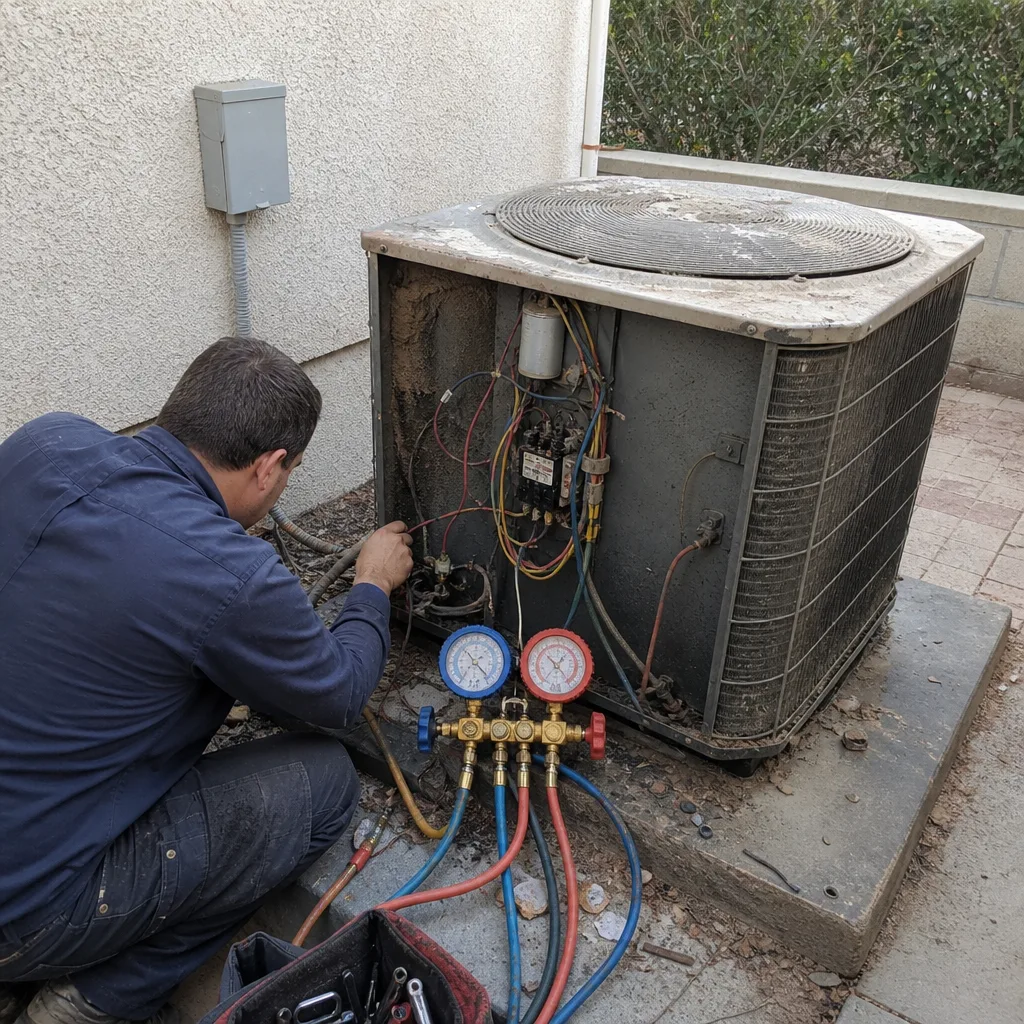
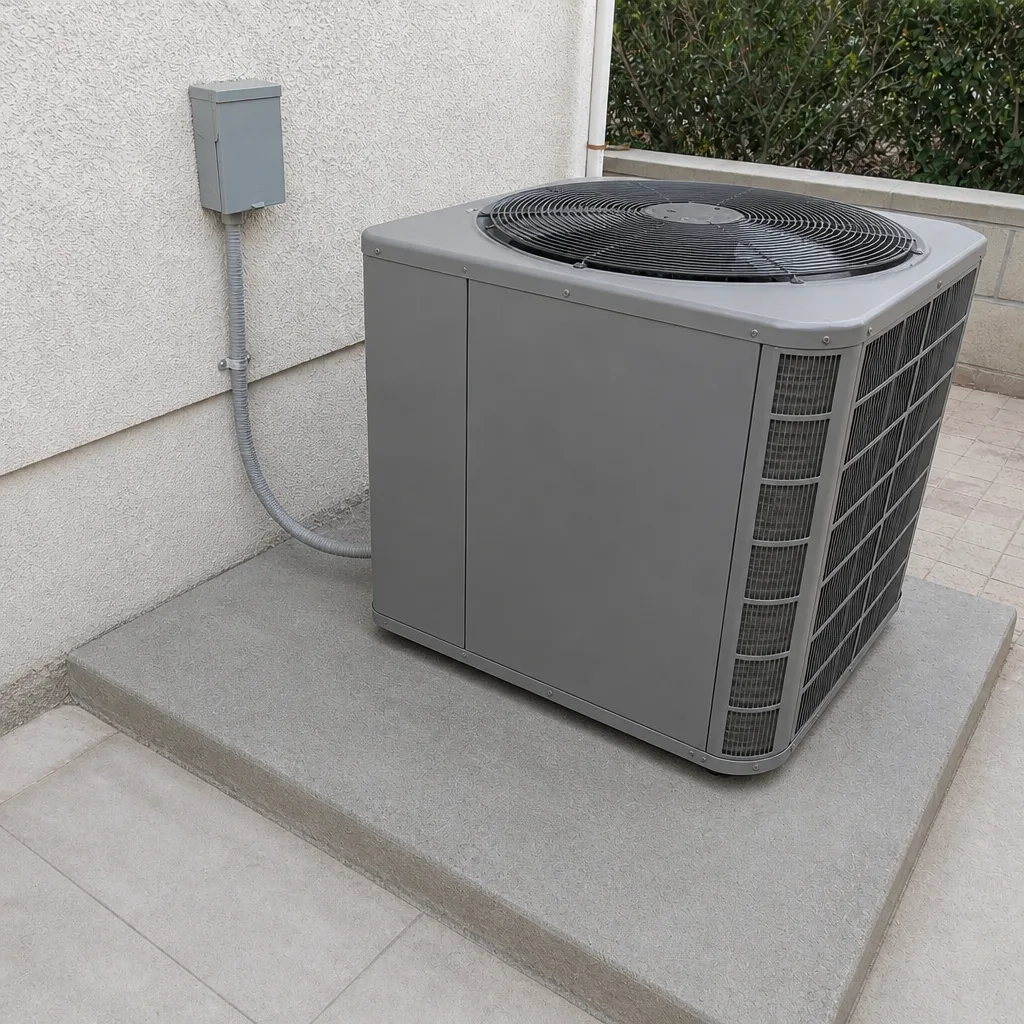
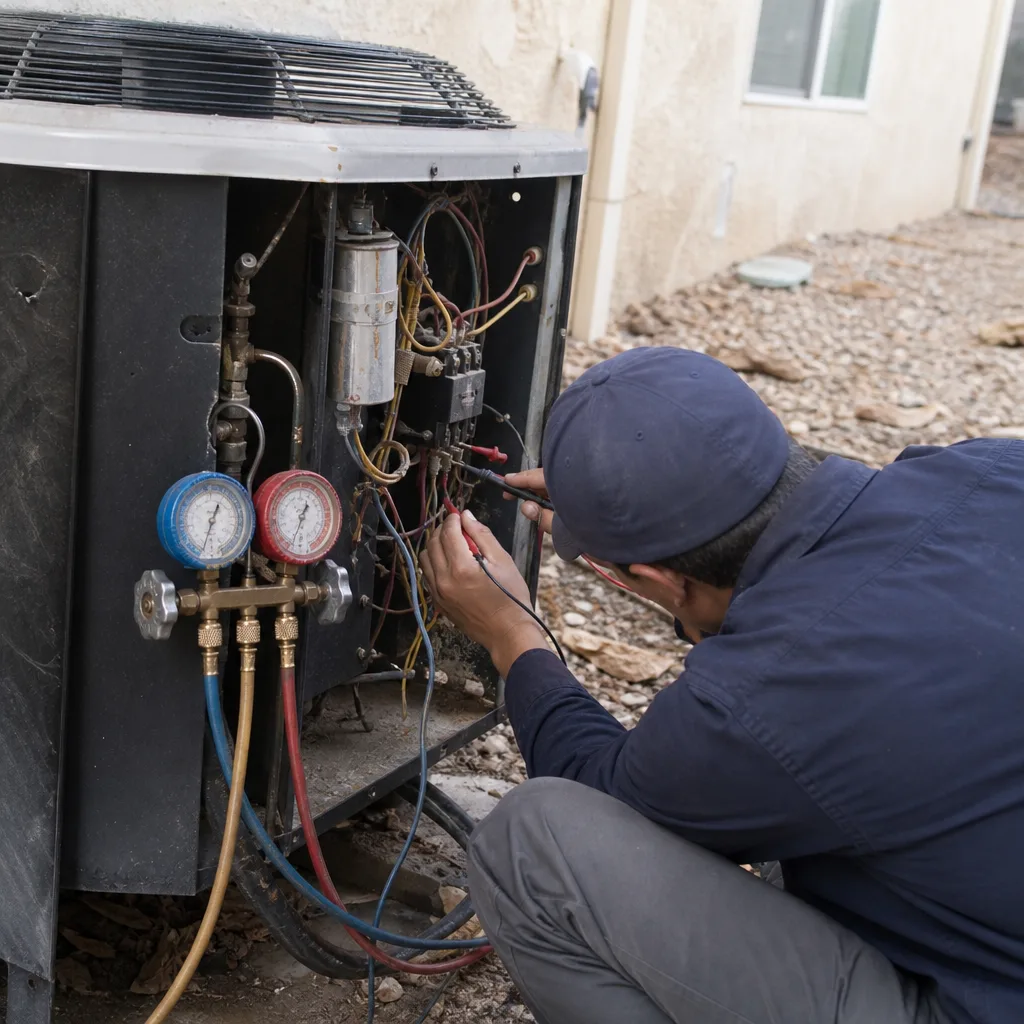
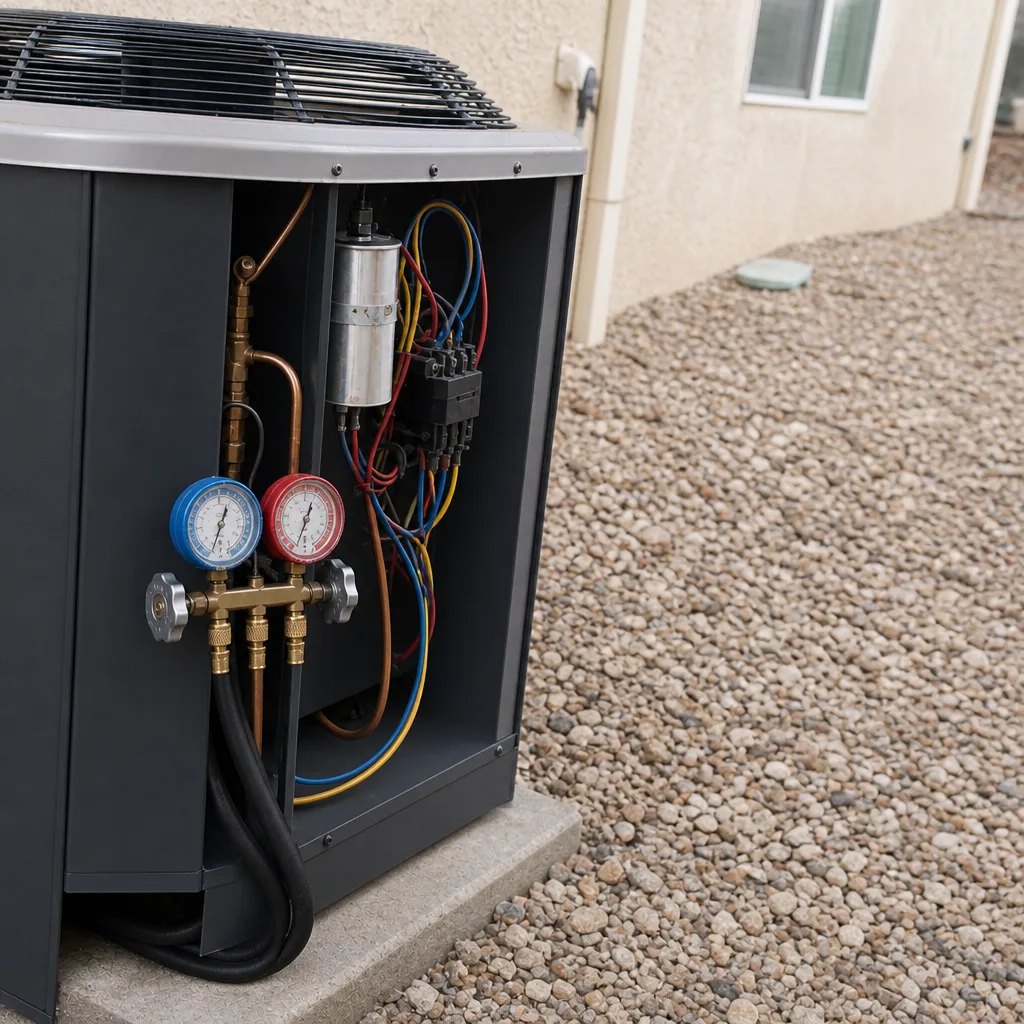
See the difference
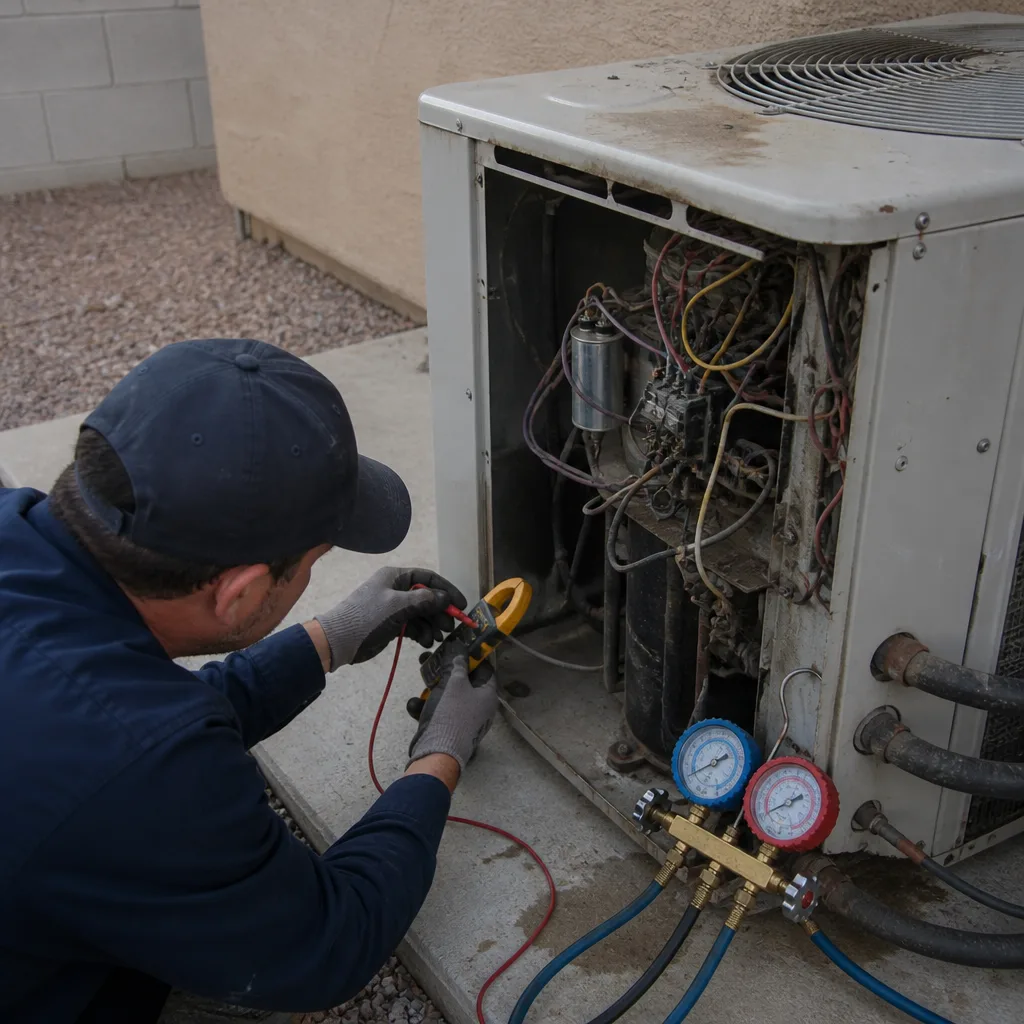 Before
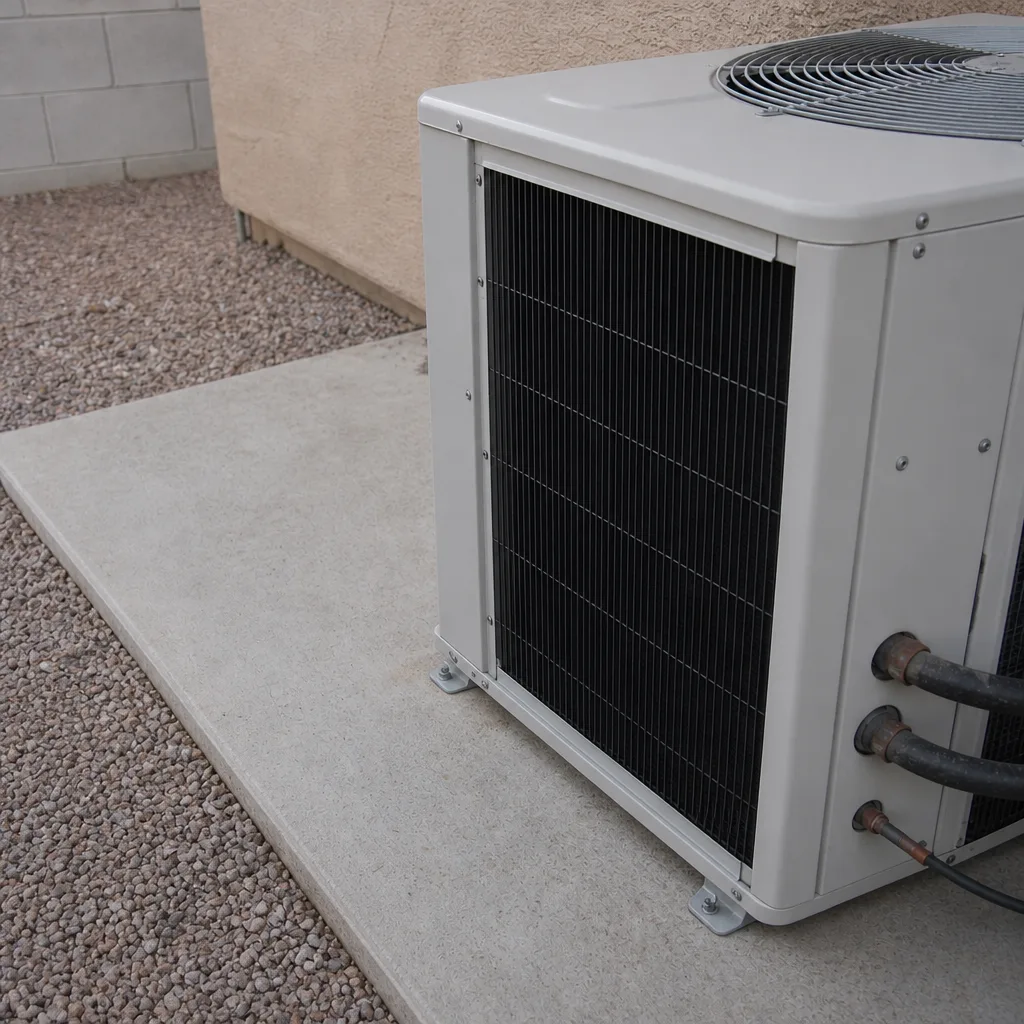 After
 Before
 After
 Before
 After
When to Call a Professional
Call a professional when the system stops cooling entirely, when you see ice on the refrigerant lines or hear unusual noises from the outdoor unit, when the system short-cycles repeatedly, or when a breaker trips every time the equipment starts. These are not situations to troubleshoot yourself. The refrigerant circuit and high-voltage electrical components carry serious injury risk, and only a trained technician has the tools and training to work safely on them. Any sign of burning smell or scorched wiring warrants an immediate call. AC Repair Summerlin offers free estimates in Summerlin. Call (833) 317-1621 to get a technician out and a written estimate in hand. We answer 24/7, and fast dispatch runs from 7am to 7pm, Sunday through Friday.
Frequently Asked Questions
Most AC repairs in Summerlin run $350 to $1,200, depending on the failed part and how much labor it takes to reach it. Capacitor and contactor replacements sit at the low end, motor replacements in the middle, and compressor replacement at the top. Call (833) 317-1621 for an exact quote, since the written estimate sets the final price.
A full AC replacement in Summerlin typically runs $9,500 to $18,000 in 2026, driven mostly by tonnage, SEER2 rating, and ductwork condition. Summerlin homes commonly need 4- to 5-ton systems, which is part of why national averages underprice the local numbers. Call (833) 317-1621 for a fixed written quote.
Same-day repair is the goal for a system that’s stopped cooling, and it’s worth calling early in the day. We answer 24/7, with fast dispatch from 7am to 7pm, Sunday through Friday. Call (833) 317-1621 and we’ll book you into the next available spot.
Yes. An annual visit typically runs $180 to $350 and catches failing components and dirty coils before they become a breakdown in the middle of cooling season. In Summerlin’s dust and heat, the system works hard enough that annual care pays for itself in avoided repairs. Call (833) 317-1621 to book a maintenance visit.
Repair is usually the right call for a single component failure on a system with remaining life. Replacement makes more sense when the repair cost climbs toward a significant share of new equipment, or when the system is failing in multiple areas. Call (833) 317-1621 for an honest assessment and a written estimate on both paths.
NV Energy runs a rebate program for qualifying high-efficiency equipment, and eligibility depends on the specific model’s efficiency rating under current 2026 program rules. Financing options are often available through manufacturers or lenders. Verify current eligibility before you sign, and ask your contractor whether they handle the paperwork. Call (833) 317-1621 to talk through what your system qualifies for.
The Bottom Line
The cost numbers that matter in Summerlin are the ones built for Summerlin: 4- to 5-ton systems, Clark County labor rates, and a cooling season long enough to make efficiency pay back faster than in most markets. Expect roughly $350 to $1,200 for repairs, $180 to $350 for annual maintenance, and $9,500 to $18,000 for replacement, with a written estimate setting the final price every time. Verify the load calculation, confirm what’s in the bid and what’s excluded, and check rebate eligibility before committing. Our technicians have up to 12 years of experience and service nine major brands, including York, Daikin, Bryant, and American Standard. Free estimates in Summerlin start with a phone call.
Whether you’re deciding between a repair and a replacement or reading a bid that doesn’t quite add up, getting a second set of eyes on the system costs nothing. Call (833) 317-1621 for a free estimate. We answer 24/7, with fast dispatch from 7am to 7pm, Sunday through Friday. You’ll get a straight diagnosis, a written price, and a clear answer on what your equipment actually needs.
Written by the team at AC Repair Summerlin.